Skip to content



Recognising a Panic Attack: The First Step Towards Helping Someone
A panic attack is often just as frightening for those watching as it is for the person experiencing it. The good news is: you don’t need to be an expert to make a difference. You need to be able to recognise what is happening and know what to do next.
Visible signs to look out for
During a crisis, it is common for people to experience:
- laboured breathing;
- shaking hands;
- sweating;
- pallor;
- agitation or, conversely, a kind of paralysis;
- you might place your hand on your chest and say that can’t breathe, that their heart is racing, or that they feel as though they are going to die or “go mad”.
What a person is feeling inside
Inside, a overwhelming terror, with a feeling of having completely lost control. It is important to realise this: when there is no a very strong reason in response to the crisis, the Panic means that the brain has set off a false alarm.
The body reacts as if there were a life-threatening situation, even though there is no real threat. The person he isn’t exaggerating — he’s genuinely suffering.
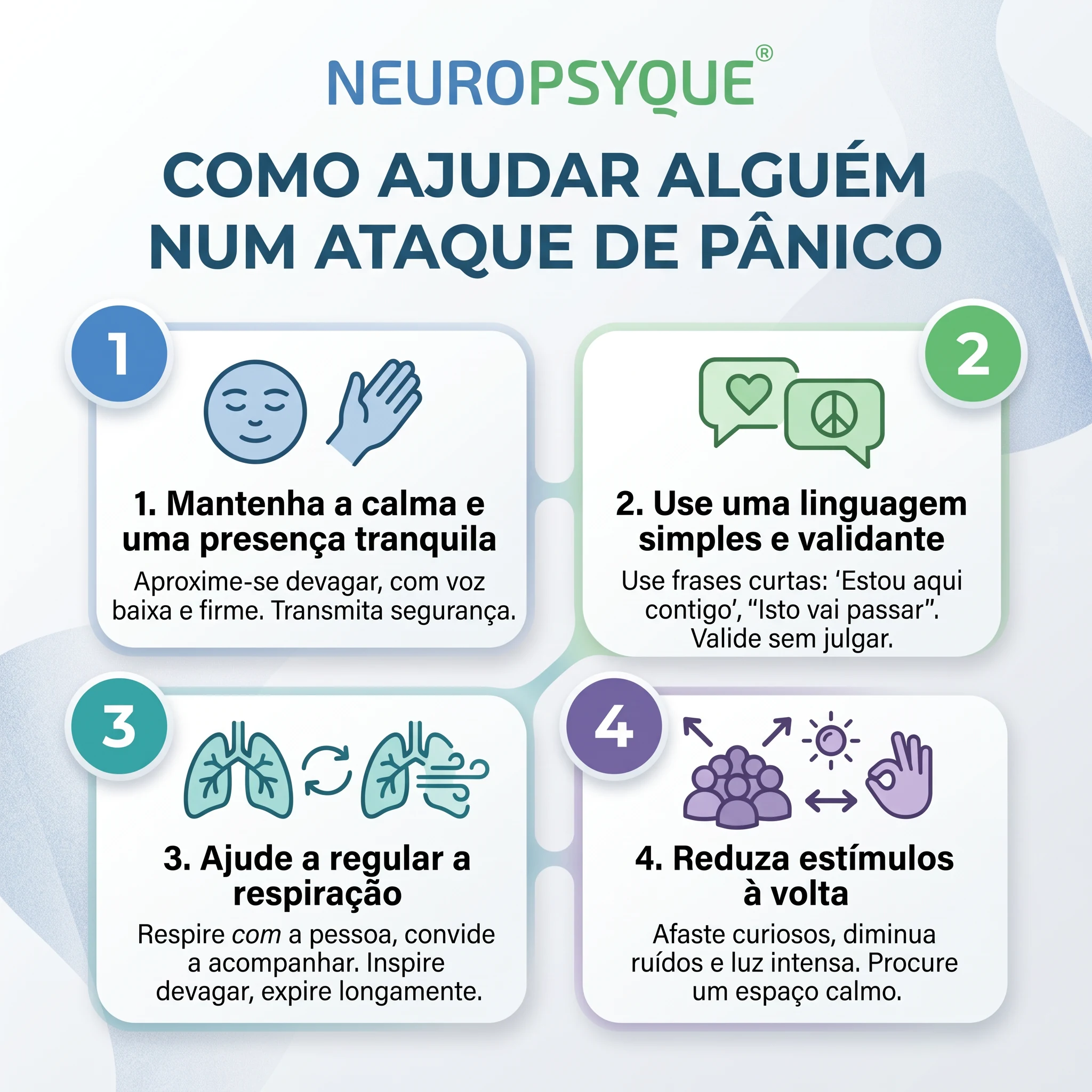
What to Do Right Now: Step by Step
1. Stay calm and maintain a calm demeanour
His calmness is infectious, and so is the opposite (restlessness). Come closer slowly, in a low, firm voice, and make it clear that you’re staying. His calm demeanour alone instils a sense of security.
2. Use simple, reassuring language
Avoid long speeches. Short sentences work best: “I’m here with you.” “This will pass.” “You’re safe.” Don’t try to dismiss the reasons for their panic. Acknowledge how the person is feeling, without correcting them.
3. Help regulate your breathing
Breathe with the person, rather than giving them orders. Orders have no effect during a crisis.
Breathe in slowly and take a a long, audible exhale, inviting her to follow along. Slowing down your breathing — particularly by lengthening your exhalation and breathing out slowly — helps to break the cycle of panic.
Many people feel that they are going to to faint during a panic attack or an episode of anxiety. Controlling your breathing is very important.
4. Reduce distractions around you
Keep onlookers at a distance (if you’re in a public place), minimise noise and bright light if possible, and find a quieter spot. The nervous system is already on high alert. The fewer the stimuli, the less the overload.
What NOT to Say or Do
Some reactions, however well-intentioned, can make the crisis worse:
- “Calm down”, “It’s nothing.” “Why are you like that?” — undermine a person’s sense of self and increase frustration.
- To grab or restrain a person — never as a matter of principle, and only in exceptional circumstances where there is imminent danger to the person or others; it may heighten the sense of threat.
- To bombard with questions — it requires a line of reasoning that, at that moment, is difficult, which causes even more stress.
- Panic too — do your best not to panic either; your agitation only fuels the other person’s even more.
Once the Crisis Is Over
When the wave goes down, people often find themselves exhausted, ashamed or in tears. Be supportive without overreacting or downplaying the situation. Offer them some water, stay close by and tell them there’s nothing to be ashamed of. This moment of acceptance after the panic is just as important as the help provided during the crisis.
When to Call for Emergency Medical Assistance
Most panic attacks resolve themselves within minutes. Even so, please call the 112 se:
- for one first seizure with no known (identifiable) cause;
- if there is one severe chest pain or persistent shortness of breath;
- if the person to lose consciousness;
- if the symptoms do not improve after about 20 to 30 minutes.
How to Provide Long-Term Support (and Look After Yourself)
The most valuable support does not come during the crisis, but outside it.
Encourage and help the person to seek appropriate support for panic attacks: Recurring crises can be effectively treated and do not have to be a part of life.
Make sure you look after yourself too. Anxiety goes hand in hand with panic. Supporting someone with anxiety attacks It’s exhausting, and it’s not right for him to be the only one support.
🧠 Key Points to Retain
- The first step is to recognise the crisis: the brain has set off a false alarm and the person is genuinely suffering.
- For now: stay calm, acknowledge how she’s feeling, breathe slowly with her and minimise distractions.
- Avoid saying “calm down”, and don’t grab her or bombard her with questions – and don’t panic yourself either.
- After the crisis, be supportive without making a big deal of it — it’s normal for someone to feel exhausted and ashamed.
- Seek medical help at the first sign of a heart attack, if you experience persistent chest pain, loss of consciousness or symptoms that do not subside.
- The most important support is long-term: encouraging professional support and looking after yourself as well.
FAQs – Frequently Asked Questions
Should I take the person to A&E straight away?
Not always. The vast majority of panic attacks pass within minutes, without the need for hospital treatment. A visit to A&E is warranted for a first-time attack if there is severe chest pain, loss of consciousness, or if there is any doubt about a possible cardiac cause.
What if it’s my son or a teenager?
However worried you may be, stay calm above all else — that’s the only way you can help. The principles are the same: a calm presence, validation and minimising distractions. Avoid scolding or belittling them. Then, at a quiet moment, talk about what happened and consider seeking specialist advice — the sooner you intervene, the better the results.
How can I help from a distance (by phone or text)?
For those who want to help, it’s even harder not to be there in person. In these situations, there’s a tendency to start asking lots of questions — try to avoid this as much as possible. Keep your voice calm, breathe in sync over the phone, help the person to ground themselves in the present moment (by describing objects around them or sounds they can hear) and ask only, in a subtle way, about the warning signs we described earlier. Keep the line open and, if necessary, help them to contact someone who can be physically present. If there are any warning signs, contact 112 directly.