Skip to content



What causes ringing in the ears?
Tinnitus, or ringing in the ears, is the perceiving a sound without an external sound source.
It can manifest as a whistling, wheezing, buzzing or pulsing sound - the sensation of feeling your own heartbeat in your ear. It affects one or both ears, and can be continuous or intermittent.
What makes tinnitus particularly challenging is that it can have various causes:
- changes in the structure of the ear
- changes in the central nervous system
- vascular origins
- musculoskeletal origins
- emotional changes
That's why the question “which doctor should I see?” is important.
The first step: the otorhinolaryngologist
In the vast majority of cases, the first specialist to consult is the otorhinolaryngologist - the doctor who specialises in the ear, nose and throat.
Many causes of tinnitus originate directly in the peripheral auditory system:
- accumulation of cerumen (wax)
- middle ear infections
- hearing loss
- prolonged exposure to intense noise
The otorhinolaryngologist will assess the ear canal, carry out hearing tests and will try to identify a treatable cause. In many cases, solving this primary cause - like removing a wax plug or treating an ear infection - is enough to eliminate tinnitus.
But there are cases in which show nothing unusual. The ear is healthy, but the ringing persists.
When the ear isn't the problem: neurology and neuropsychiatry
Here begins the part that many patients don't know about: the chronic tinnitus is, to a large extent, a brain phenomena (neurological) and not just the ear.
Neuroimaging tests have shown that people with chronic tinnitus have persistent hyperactivity in the auditory cortex - the region of the brain that processes sound.
The ear may be intact, but the brain “registers” a sound that can't stop.
This is where neurologist and neuropsychiatrist play a central role: they assess the neurological pathways involved, identify the central causes and treat the emotional impact tinnitus.
O chronic stress, a anxiety, a depression and the sleep disorders are frequent companions chronic tinnitus and can make it significantly worse if they are not addressed.
The multidisciplinary approach: why one doctor is rarely enough
Tinnitus is one of the conditions that best illustrates the need for a person-centred medicine. Depending on the cause and gravity, may be involved:
- Otorhinolaryngologist - assessment of the peripheral auditory system
- Neurologist - investigation of nerve pathways and central causes
- Neuropsychiatrist - treatment of emotional impact and psychiatric comorbidities
- Audiologist - functional hearing assessment and auditory habituation
- Physiotherapist - in cases of tinnitus of cervical or musculoskeletal origin
This multidisciplinary team is often, the only effective way to respond to a condition that rarely has a single cause.
Innovative treatments: what modern neuroscience has to offer
For years, many patients have heard the phrase “there's nothing you can do - you'll have to learn to live with it”. Modern neuroscience provides a different perspective.
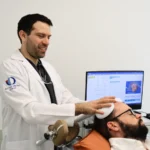
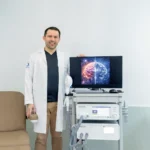
A Transcranial Magnetic Stimulation (TMS) is one of the therapeutic more effective in tinnitus of central origin. Through magnetic pulses directed at the auditory cortex, it reduces the neuronal hyperactivity responsible for the perception of tinnitus - non-invasively, painlessly and without medication.
Studies published in journals such as JAMA Otolaryngology show clinically significant improvements, with effects sustained for more than six months.
It is important that EMT is integrated into a neurological assessment and in-depth neuropsychiatric treatment, treating not just the symptom, but the brain mechanism that sustains it.
🧠 Key Points to Retain
- Ringing in the ears (tinnitus) has many different causes.
- The first specialist to consult is usually an otorhinolaryngologist, to rule out causes in the ear.
- When the ear is healthy, tinnitus can originate in the brain - and requires neurological or neuropsychiatric assessment.
- Chronic tinnitus is often associated with anxiety and depression, which need to be treated together.
- The multidisciplinary approach is the most effective for persistent or complex cases.
- Transcranial Magnetic Stimulation (TMS) is an innovative, non-invasive option with promising results in tinnitus with a central cause.
- Sudden tinnitus in one ear, pulsating or with other neurological symptoms should be assessed urgently.
FAQs - Frequently Asked Questions
Can ringing in the ears be cured?
It depends on the cause. When it has an identifiable and treatable origin - such as cerumen or infection - it can disappear completely. In chronic cases of central origin, the aim is to reduce the intensity and emotional impact and promote habituation. Current therapies, including EMT, allow for significant improvements in quality of life.
Can I go straight to the neurologist without going to the otorhinolaryngologist?
Yes. If tinnitus is accompanied by dizziness, headaches or significant emotional impact, consulting a neurologist or neuropsychiatrist directly is a valid option. The initial assessment should cover all these angles.
Can stress make tinnitus worse?
Yes. Chronic alertness sensitises the nervous system and amplifies the perception of internal auditory signals. Stress and anxiety are not just consequences of tinnitus - they can be factors that generate or aggravate it. Treating the emotional component is an essential part of the therapeutic plan.
Is Transcranial Magnetic Stimulation painful?
No. EMT is a non-invasive procedure, without anaesthesia and without hospitalisation. The patient resumes normal activities immediately. It's a technique with decades of clinical use and a well-established safety profile.
How long does the treatment take?
It varies depending on the cause. Cases of peripheral auditory origin can resolve within weeks. Chronic cases of central origin require a longer plan, which may include EMT, neuropsychiatric counselling and psychotherapy.