Skip to content


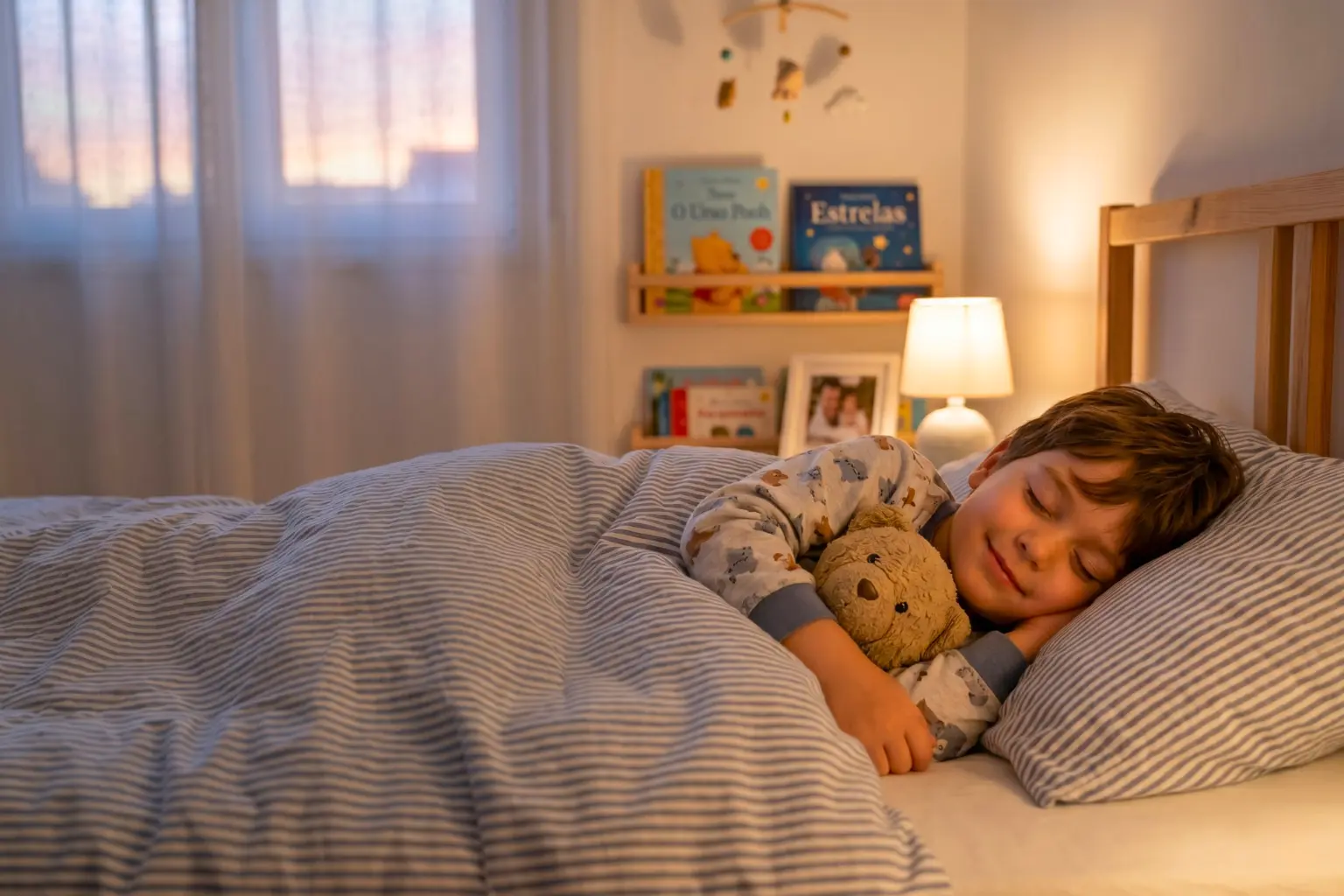
Hours of Sleep by Age: The Scientific Reference Table
The number of hours needed for sleep repairer It changes a great deal throughout childhood. The most widely accepted recommendations come from the American Academy of Sleep Medicine (AASM), endorsed by the American Academy of Paediatrics, and indicate the total sleep over 24 hours (night-time sleep + naps):
- Babies (4 to 12 months): 12 to 16 hours
- 1 to 2 years: 11 am to 2 pm
- 3 to 5 years: 10 am to 1 pm
- Ages 6 to 12: 9 to 12 hours
- Aged 13 to 18: 8 to 10 hours
Under 4 months there is no fixed amount: Sleep patterns are still very irregular and vary from baby to baby. Up to 4 months, the baby should sleep as long as it takes, and sleeping for more than 16 hours isn’t a problem.
In Portugal, most children does not get the recommended number of hours’ sleep for someone of his age.
But knowing the number That’s only half the story — the other half is realising the why of this issue and what happens when there is a shortage.
Why is Sleep So Crucial for the Developing Brain?
Whilst a child is asleep, their brain is not “switched off“ — is currently under construction.
It is at this stage that reinforce memories and learning During the day, hormones responsible for growth are released, and the information for the following day.
Adequate sleep is therefore one of the pillars of a neurodevelopment healthy in children and young people, and is just as important as diet or exercise.
A good night’s sleep helps the brain to to mature, not just to rest.
Getting the recommended amount of sleep is linked to clear improvements:
- in terms of attention and available energy;
- in behaviour;
- in memory;
- in the regulation of emotions;
- on overall physical and mental health.
The opposite is also true.
Getting less sleep than you need:
- exacerbates and increases the risk of learning difficulties;
- causes irritability and impulsive behaviour;
- causes difficulties in relationships with family and friends;
- In the long term, it is linked to chronic health problems, as well as conditions such as obesity and high blood pressure.
Signs That Your Child May Not Be Getting Enough Sleep
Unlike adults, a tired child doesn’t always slow down — often accelerates. Please note:
- great difficulty getting up in the morning and feeling grumpy at the start of the day
- restlessness or hyperactivity, particularly in the late afternoon
- difficulty concentrating during simple conversations and a decline in academic performance
- irritability, crying easily or frequent tantrums
- falling asleep several times at unexpected moments, such as in the car or on the sofa
This phenomenon, the “the hyperactivity paradox“, explains why a lack of sleep is sometimes mistaken for Attention Deficit Hyperactivity Disorder (ADHD).
Before jumping to any conclusions, it’s always worth ensure that the child is getting the sleep they need.
How to Ensure a Child Gets the Sleep They Need
Most children’s sleep problems improve with simple, consistent adjustments:
- Normal opening hours: Going to bed and waking up at the same time, including at weekends, helps to stabilise your body clock.
- Screens outside the bedroom: Light from screens delays the production of melatonin, the sleep hormone. It is best to switch off mobile phones, tablets and the television 30 to 60 minutes before going to bed (at least).
- Suitable environment: A dark, quiet and cool room, set aside for sleeping and not for playing.
- A predictable routine: a bath, a story for the little ones, dim lighting — a calm sequence that signals to the brain that it’s nearly time for bed. What that really shouldn’t happen Before going to bed, these are activities that bring great euphoria, ecstasy and excitement.
- Age-appropriate naps: They are important for younger children, but from the age of 5–6 onwards, they can make it difficult to sleep at night if they are late or last too long.
When the Problem Goes Beyond the Routine
There are times when you still feel tired even when you have good routines.
If the child has respiratory problems, it seems to stop breathing if you have trouble sleeping, or wake up frequently, this may be due to sleep apnoea — a condition that fragments a rest without the child realising it.
As for the difficulty, persistent Difficulty falling asleep may indicate insomniawhich it also affects children.
In such cases, and whenever the mere application of best practice does not solve the problem, it is important to have a specialist medical assessment.
If treatment is required, the approach should be child-centred, and in the seeks to tackle the root of the problem.
As well as sleep deprivation potentially leading to misdiagnoses, as in the case of the ADHD, one of the most common mistakes is to treat the child without first ensuring that all previous possibilities have been explored, including the best practices we have mentioned, and treatments non-invasive and which prevent side effects in the developing brain, such as the Neurofeedback.
🧠 Key Points to Retain
- The recommended amount of sleep varies with age: 12–16 hours for babies, falling to 8–10 hours for teenagers.
- For the youngest children, the total includes naps; for those under 4 months, there is no set figure.
- Sleep consolidates memories, regulates emotions and supports growth — it plays an active role in brain development.
- In children, a lack of sleep tends to manifest itself more as restlessness and irritability than as drowsiness.
- A regular routine, no screens in the bedroom and a calm daily routine sort out most of the problems.
- Snoring, pauses in breathing or persistent insomnia warrant specialist assessment.
FAQs – Frequently Asked Questions
How many hours should a 6-year-old sleep?
Between 9 and 12 hours a day. From this age onwards, most of their sleep takes place at night, and most children no longer need a nap.
Do the recommended hours include naps?
Yes, up to the age of 5. The recommendations refer to total sleep over a 24-hour period — night-time sleep plus naps. From the age of 6 onwards, the figures mainly refer to night-time sleep.
Up to what age should children have a nap?
It varies from child to child, but most children stop needing a nap between the ages of 3 and 5. At this stage, late or very long naps can make it difficult for them to fall asleep at night.
What happens if a child sleeps for less than the recommended amount?
In the short term, irritability, restlessness and difficulty concentrating may occur. Over the long term, sleep deprivation is linked to learning and behavioural problems, as well as an increased risk of obesity and high blood pressure, including in later life.
My son sleeps for the right amount of time but is still tired. Why is that?
The quality of your sleep is just as important as the quantity. Snoring, pauses in breathing or frequent awakenings can disrupt your sleep. If you continue to feel tired, it is worth seeking specialist advice.
Do screens before bedtime really affect your sleep?
Yes. The light from screens delays the release of melatonin and makes it harder to fall asleep. It is recommended that you switch them off 30 to 60 minutes before going to bed and keep them out of the bedroom.