Skip to content



Frontal Headache: Why Does the Pain Occur in the Forehead?
The frontal region of the head is particularly rich in nerve endings from the trigeminal nerve, which is primarily responsible for transmitting pain signals from the face to the brain.
It also contains the anterior breasts (air-filled cavities above the eyebrows) and is under constant strain from the neck muscles and the shoulders.
When any of these structures is annoyed, inflamed or subjected to prolonged stress, the brain interprets the signal as pain in the forehead.
That is why issues as varied as stress, a cold or spending hours in front of a screen can lead to a headache so similar.
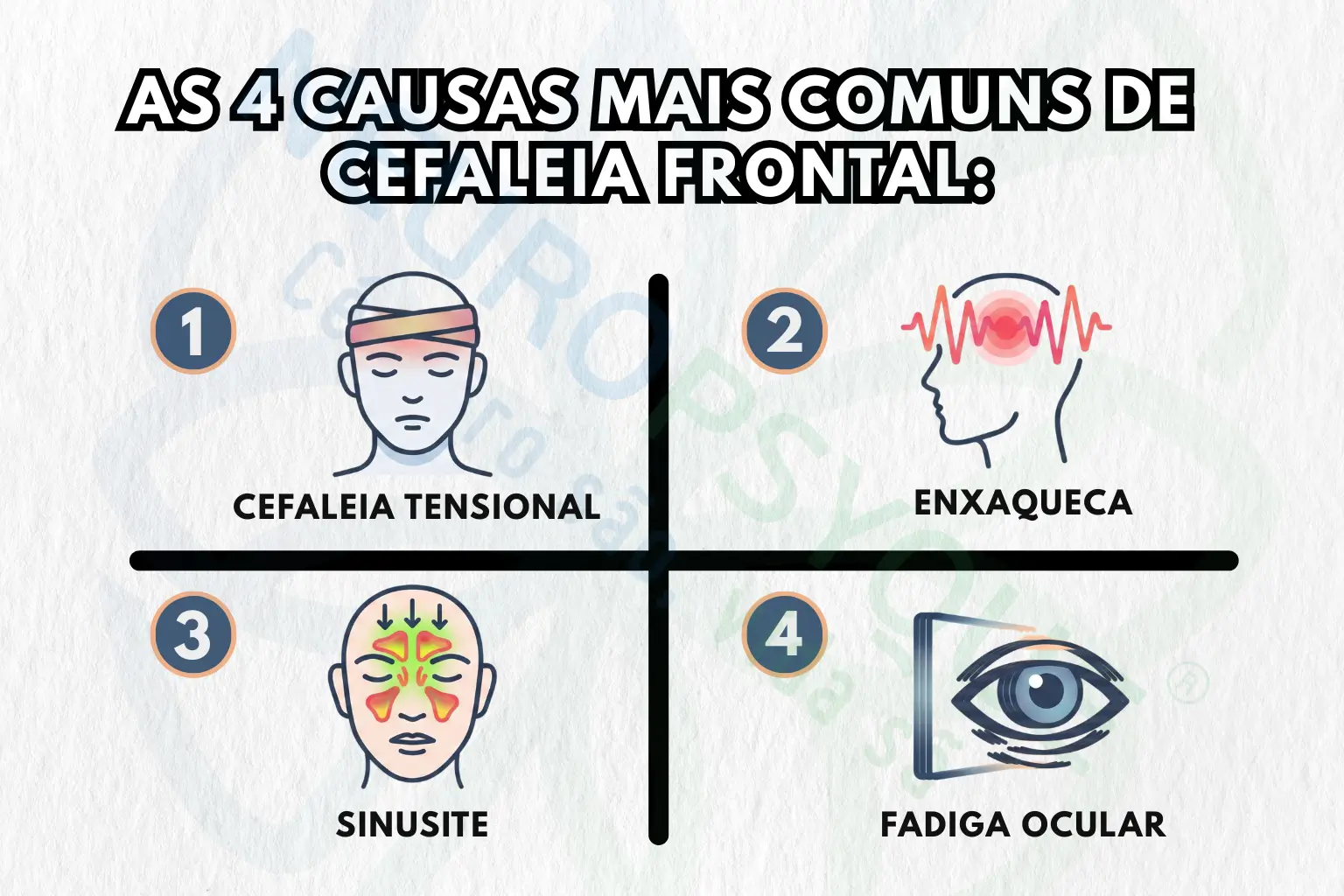
The Most Common Causes of Frontal Headaches
Tension-type headache
It is by far the most common cause of pain in the forehead.
It is characterised by a a feeling of tightness or pressure in the form of a horizontal band across the forehead, often accompanied by tension in the nape of the neck and shoulders.
It is not usually throbbing or debilitating, but it can last for hours.
A Tension-type headache is a primary headache: is not caused by underlying conditions or structural problems.
They are usually triggered by:
- stress;
- poor posture;
- sleep deprivation;
- fatigue.
Migraine
Although it is usually unilateral (affecting only one side of the head), the migraine it may manifest itself in the frontal region.
The pain is typically throbbing, ranging from moderate to severe, often accompanied by nausea and sensitivity to light and sound.
In Portugal, it is estimated that around one in seven people suffer from migraines, which are much more common in women. Globally, it is the third leading cause of years lived with disability — a huge burden in the lives of those who suffer.
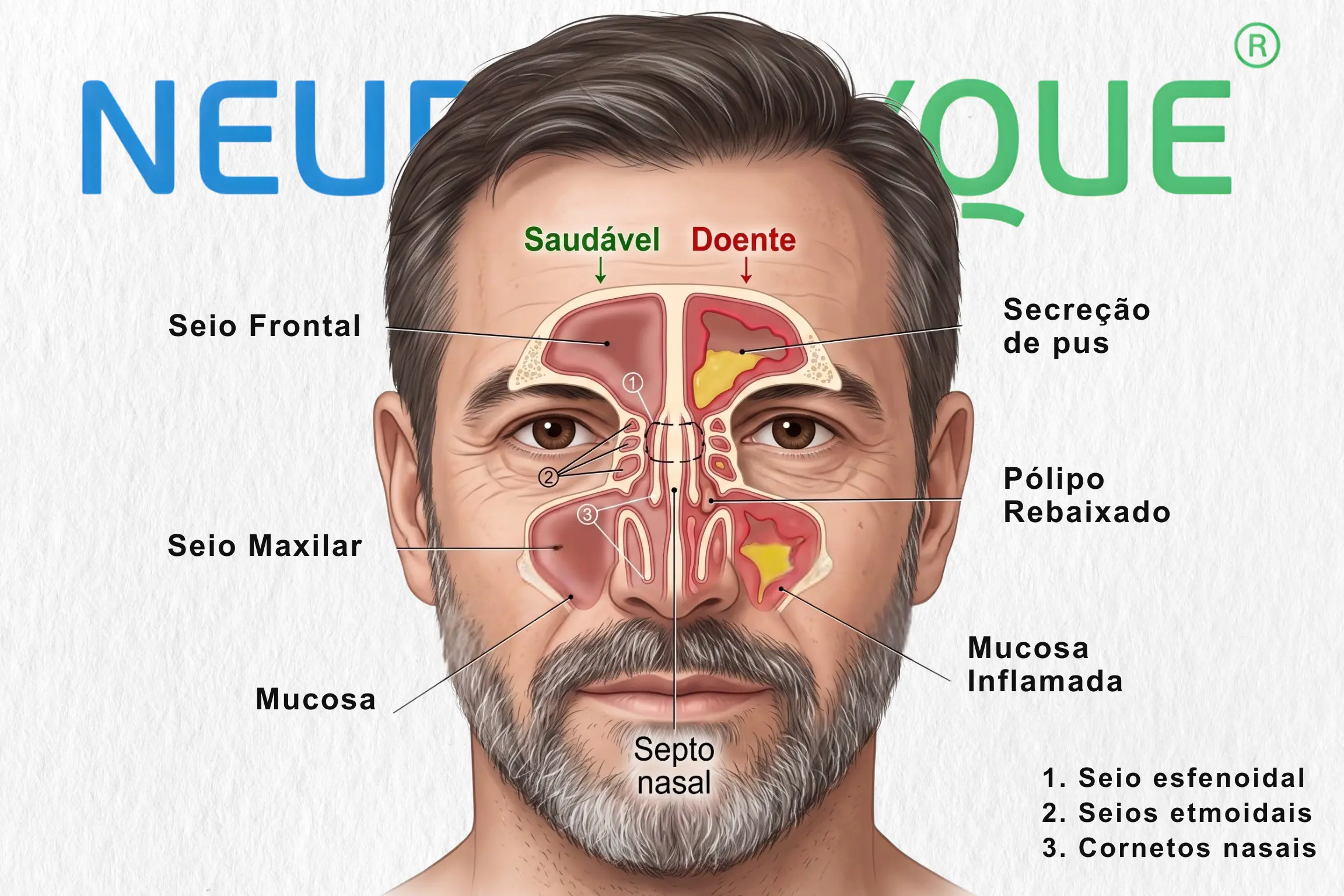
Frontal Sinusitis
When the anterior breasts become inflamed, usually due to a respiratory infection, a pressing pain develops above the eyebrows, which gets worse when tilting the head.
It is often accompanied by a blocked nose, thick mucus and, sometimes, a fever.
Many “sinusitis pains” are, in fact, misdiagnosed migraines. This confusion leads to the unnecessary use of antibiotics and delays appropriate treatment. If your “sinusitis” is recurrent, but often without a fever or purulent (yellowish/greenish) discharge, it is worth reassess a diagnosis from a specialist.
Eye Strain and Refractive Errors
Many hours spent staring at screens, extended reading, or even a inappropriate degree (needing adjustment) put excessive strain on the eye muscles.
The result is a feeling of heaviness behind the eyes, extending up to the forehead.
This pain improves with visual rest or by correcting the prescription.
Stress, Anxiety and Lack of Sleep
The modern brain is constantly overloaded.
Anxiety increases levels of cortisol e adrenaline, causes chronic muscle tension and disrupts sleep — a perfect recipe for recurring frontal pain.
Understanding this link between the brain, emotions and pain is essential for treat the cause, not just the symptom.
If you spend a lot of time working at a computer, try the the “20-20-20” rule”: Every 20 minutes, look for 20 seconds at something about 6 metres (20 feet) away. This simple habit significantly reduces eye strain and tension in the front of the head by the end of the day.
Warning Signs: When to Seek Medical Help
The vast majority of frontal headaches are benign.
Nevertheless, there are signs that warrant an expert assessment without delay:
- sudden and extremely severe pain (“the worst pain of my life”);
- pain that first occurs after the age of 50;
- changes in vision;
- weakness on one side of the body;
- mental confusion;
- high fever with a stiff neck;
- pain that changes in nature and becomes progressively more frequent.
You should also consult a specialist when the pain becomes chronic — 15 or more days a month for at least three months.
Modern Approaches to Treating Frontal Headaches
In order to achieve a effective treatment the diagnosis must be genuinely complete e weighted.
In addition to conventional strategies — painkillers, hydration, sleep hygiene, stress management, cervical physiotherapy, amongst other treatments — there are now neuroscience-based treatments showing promising results for chronic or treatment-resistant headaches.
A Transcranial Magnetic Stimulation (TMS) is a non-invasive technique which uses magnetic pulses to modulate the activity of areas of the brain involved in perception of pain, with very promising results for headaches, particularly migraines.
In NeuroPsyque, we treat a headache for what it really is: a signal that something about how the brain works warrants attention.
With lengthy consultations and one multidisciplinary team, we look for the root cause and offer solutions that go beyond long-term medication. Book your Neurology consultation with us.
🧠 Key Points to Retain
- A headache in the forehead is a common type of headache, with many possible causes and is generally benign.
- Tension-type headache is the most common cause, followed by migraine, which can also occur in the frontal region.
- Sinusitis, eye strain, stress, poor posture and lack of sleep are common triggers.
- Warning signs such as sudden, severe pain, neurological changes or chronic pain require specialist assessment.
- Transcranial Magnetic Stimulation opens up new possibilities, particularly for chronic conditions.
- Treating the cause, rather than just the symptom, is the most effective way to get rid of recurring pain.
FAQs - Frequently Asked Questions
Is it normal to have a headache in the forehead every day?
No. Pain experienced daily or on more than 15 days a month for three months is considered a chronic headache and should be assessed. There may be treatable causes or overuse of painkillers, which, paradoxically, perpetuates the pain.
How can you tell the difference between sinusitis and a frontal migraine?
Sinusitis is characterised by nasal congestion, purulent discharge and, at times, a fever, and the symptoms worsen when the head is tilted. A frontal migraine is typically throbbing in nature, accompanied by nausea and sensitivity to light, without any marked nasal symptoms.
Can stress really cause pain in the forehead?
Yes, and it is one of the most common causes. Chronic stress causes sustained muscle tension and alters the neurotransmitters involved in pain perception. Managing stress is therefore an essential part of treatment.
When should I see a neurologist for a headache?
Whenever the pain becomes frequent, very severe, changes from its usual pattern, begins after the age of 50, or is accompanied by neurological symptoms. Also when conventional treatments are ineffective or painkillers are used frequently.