Skip to content


Why is Machado-Joseph known as the “Azores disease”?”
The association between the Machado-Joseph disease (MDJ/MJD) and the Azores archipelago came into being as a result of two factors.
Firstly, the disease was identified in several families of Azorean origin, all over the world.
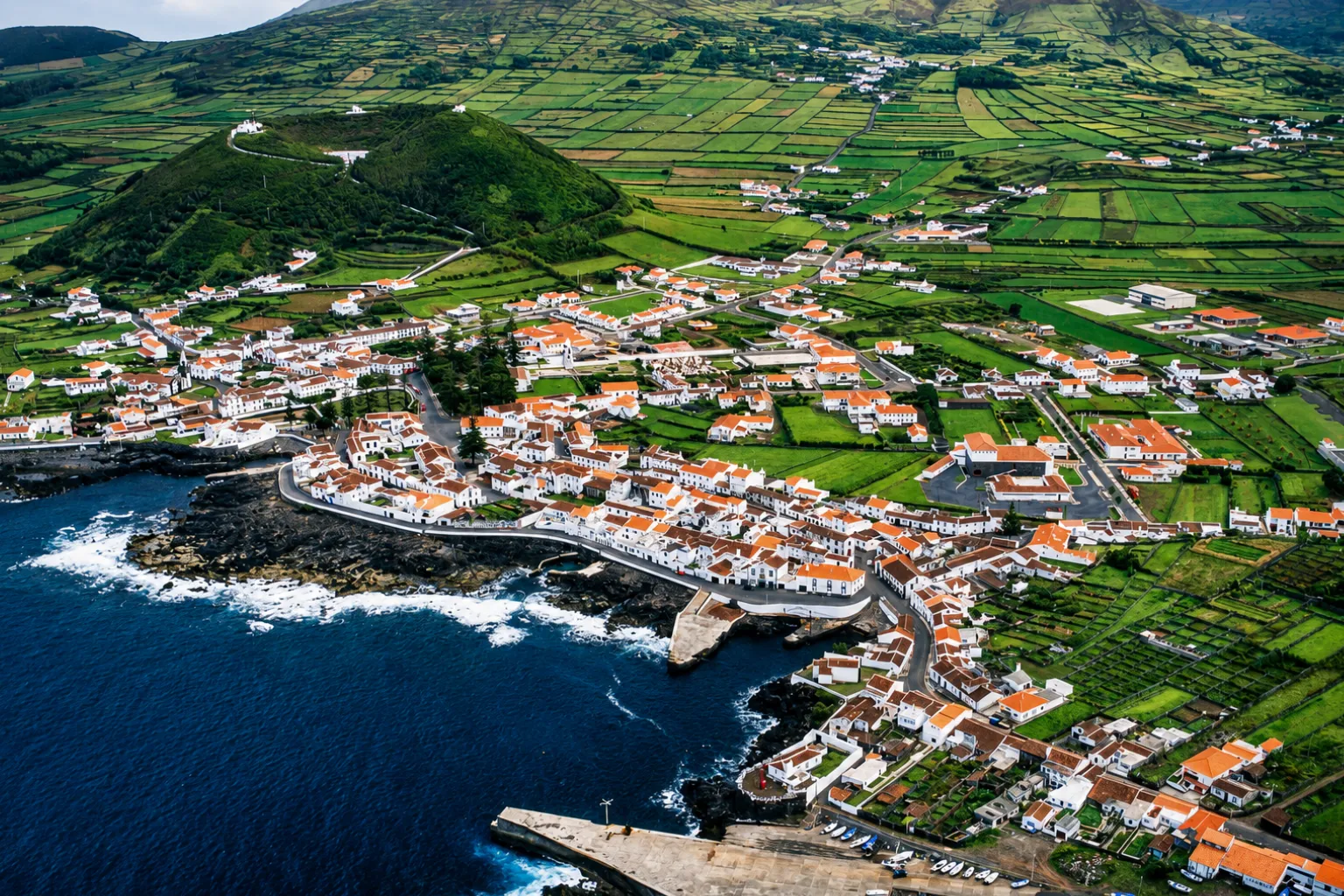
Secondly, because they are so common on the islands — particularly on the Flowers and in the Graciosa — is among the highest recorded in the world.
The explanation is, at the same time, genetics e historic: a common ancestor is thought to have passed on the mutation in the gene responsible for the condition, which then became concentrated within a small, isolated population, largely because it is an island.
But the name can be misleading. The Machado-Joseph disease It is not exclusively Azorean, nor even exclusively Portuguese. Its connection to the Azores explains its documented origin and high local prevalence — not exclusive.
Where Does the Name “Machado-Joseph” Come From?”
Unlike most diseases, which are named after the doctor who described them, this one owes its name to two families of Azorean emigrants.
In the 1970s, in the United States, researchers identified patterns of symptoms that described similar neurological conditions in descendants of Azoreans, and the first descriptions were linked to the surnames of these two families — Machado e Joseph.
As science advanced, it became clear that these conditions were manifestations of the same disease, with the same genetic cause. It was then given the technical designation of spinocerebellar ataxia type 3 (SCA3). Today, the two terms coexist and refer to the same condition.
Why is the Prevalence So High in the Azores?
There is nothing mysterious about the high frequency on the islands: it is the foreseeable consequence on how genetics behaves in small, isolated populations.
Machado-Joseph is transmitted in a way that autosomal dominant — in simple terms, it is enough to inherit the mutation from one of the parents in order for the condition to develop. Only one parent needs to carry this gene. This dominant pattern means that the mutation is easily passed down from one generation to the next.
So, if one of the parents If they have the genetic mutation, each child has 50% of the likelihood of inheriting and developing the disease. If the mutation were recessive — that is to say, if two amended copies were required — he would have a son 0% the probability of developing the disease when only one parent was a carrier and 25% when both were carriers.
The founding effect
When a small group of people gives rise to an entire population — as happened during the colonisation of isolated islands — the genetic characteristics of those few “founders” remain over-represented in subsequent generations.
If one of the founders carried the mutation, it becomes, in that population, a much greater burden than he would have on a continent, where he would be lost amongst millions of people.
Over the centuries, in a closed island community, frequency accumulates — and that is why the Flowers and Graciosa have some of the highest diagnostic rates per 1,000 (one thousand) inhabitants in the world.
Emigration did the rest
O the Azores archipelago It is, historically speaking, a region from which many have set out and have set out in the past emigrants to other continents, particularly in the 19th and 20th centuries, to the The United States, Brazil and Canada.
The genetic mutation travelled with people — which is why the disease was eventually described for the first time outside Portugal, in the United States. The “Azores disease” spread along the routes taken by those who left.
A Global Illness, Not Just a Portuguese One
Although it was first documented amongst Azoreans and is particularly common on the islands, the Machado-Joseph variant exists in many populations with no connection whatsoever to the Azores.
A SCA3 is the most common form of hereditary spinocerebellar ataxia worldwide, with cases reported in Asia, the Americas and across Europe — some with their own genetic origins, independent of the Azorean lineage.
In other words: its Azorean origins explain the extremely high local prevalence, but do not make Machado-Joseph a “Portuguese” or “island” condition. It is a human genetic disorder, which probably arose spontaneously as a genetic mutation some time after the first cases were reported in the Azores.
What the Azorean Community Has Taught Science
The concentration of affected families in the Azores has transformed the region into a a first-rate scientific contribution.
Following several generations within a stable community has made it possible to study how the disease is transmitted, how it progresses and how it varies from person to person — information that is difficult to obtain from more scattered populations.
It was also against this backdrop that the following developments took place in Portugal, pioneering genetic counselling programmes, now an international benchmark, which have paved the way for informed decisions on genetic testing and family counselling.
The history of this disease is, to a large extent, the history of a community that helped ensure that science could help it.
🧠 Key Points to Retain
- Machado-Joseph disease became known as the “Azores disease” because it was first identified in Azorean families and because its prevalence on the islands is among the highest in the world.
- The name comes from two families of emigrants — the Machados and the Josephs; technically, it is known as spinocerebellar ataxia type 3 (SCA3).
- The high local prevalence can be explained by the founding effect: in a small, isolated population, a change in a common ancestor is concentrated across generations.
- The condition is inherited in an autosomal dominant pattern — it is sufficient to inherit the mutation from just one parent.
- Emigration from the Azores spread the disease to various countries.
- Despite its name, it is neither exclusively Azorean nor Portuguese: SCA3 is the most common form of hereditary ataxia worldwide.
- The study of Azorean families has been crucial to scientific understanding and to genetic counselling.
FAQs – Frequently Asked Questions
Does Machado-Joseph disease only occur in the Azores?
No. It was first documented in Azorean families and is very common on the islands, but it occurs in populations all over the world — many of which have no connection whatsoever to the Azores.
Why does it bear the names of two families?
This is because the condition was first described in the 1970s in the United States in two families of Azorean immigrants — the Machados and the Josephs. It was later realised that this was a single condition, which was also given the technical name SCA3.
Does having Azorean ancestry increase my risk?
Not in itself — the overwhelming majority of people with Azorean roots do not carry the condition. The risk depends on whether or not the mutation is present in the family itself. Those with known cases should seek specialist genetic counselling.
Did emigration spread the disease to other countries?
To some extent, yes. Emigration has taken families — and the genetic variation — to various countries. There are, however, populations in other parts of the world with their own genetic origins, independent of the Azorean lineage.
“Are ”Machado-Joseph“ and ”SCA3” the same thing?
Yes. These are two names for the same condition: the first, historical, is linked to the families in which it was first described; the second, technical, is used in international medical literature.