Skip to content



Intermittent Double Vision: What is Diplopia?
Seeing double is known, in medical terms, as diplopia: seeing two images of a single object. They may appear side by side, one on top of the other, or at a slight angle.
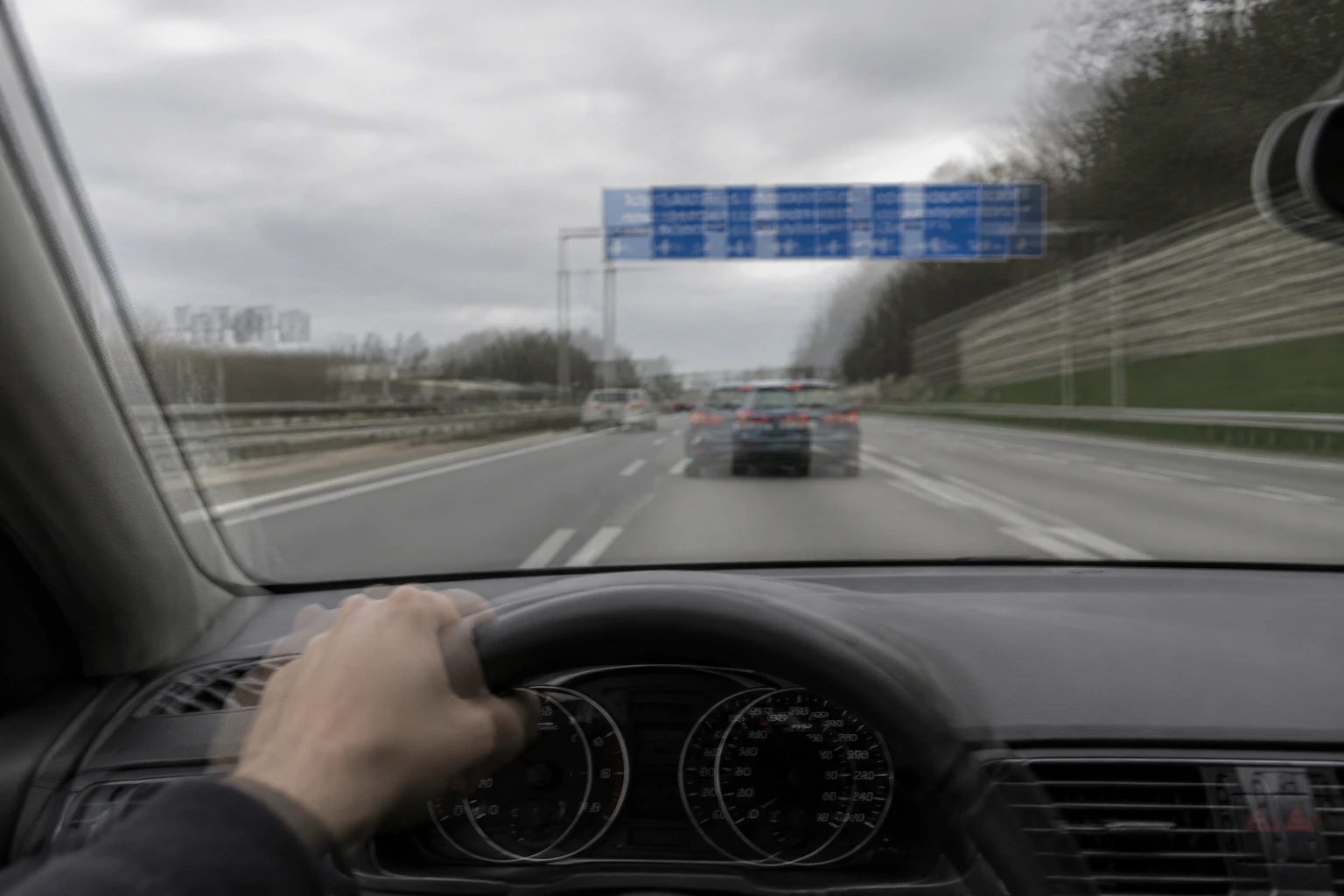
The discomfort is greater than it seems to anyone who has never experienced it, because the brain is no longer able to judge distances properly — reading, going down stairs or driving suddenly become difficult.
What makes the difference is not just see twice as much, but how double vision changes throughout the day. The one that appears and disappears tells a different story from the one that is always there.
The Simplest Test: Cover One Eye
There’s a test you can do right now, at home, which can help you identify the cause of the problem. Cover one eye with your hand. Then try the other one.
- If the double image disappears when covering either eye: double vision is called “”binoculars". The two eyes no longer focus on exactly the same spot. The cause lies in the muscles that move the eyes or in the nerves that control them.
- The double image continues even with one eye covered: it’s monocular. The problem lies within the eye itself — such as cataracts, uncorrected astigmatism or dry eye. In such cases, it is the ophthalmologist who carries out the assessment.
The dual vision of the myasthenia gravis, which prevents the chemical signals for the signals sent by the nerves to be received correctly, it is always binocular: it disappears as soon as you cover one eye, because it depends on the two eyes being misaligned with each other.
What Might Be Causing Intermittent Double Vision
Seeing double from time to time can have several possible explanations, and not all of them are cause for concern:
- Eyes working too hard at close range: at the end of long hours spent reading or looking at a screen, the eyes may lose the ability to converge — to “turn inwards” at the same time. Double vision mainly occurs when looking at close objects and disappears when looking into the distance or resting the eyes. It is common and can be corrected with eye exercises.
- A hidden misalignment: Many people have a slight misalignment in one of their eyes, which the brain “corrects” (compensates for) effortlessly in everyday life. When tired, stressed or under the influence of alcohol, this correction fails and the image becomes double. This pattern mimics that of myasthenia, and this is one of the reasons why the diagnosis must be made by a doctor.
- Thyroid disorders: When the thyroid affects the tissues around the eyes, the eye muscles swell and have difficulty moving. This is the most common cause of confusion with myasthenia gravis — and the two conditions can even coexist.
- Diabetes and high blood pressure: affect the blood supply to one of the nerves in the eyes. Double vision sets in quite markedly and persists for weeks.
- Migraine: Some attacks cause visual disturbances lasting a few minutes, accompanied by a headache.
- Myasthenia gravis: My double vision comes and goes; it’s better in the morning, gets worse as I use my eyes, and improves when I rest them.
- Diseases of the nervous system, such as multiple sclerosis.
Why Myasthenia Gravis Causes Double Vision
To ensure that both eyes are always focused on the same point, several small muscles have to work in unison, controlled by nerves that originate in the brain. The balance between them is millimetric.
In myasthenia gravis, a chronic autoimmune disease of the muscular system, the immune system interferes with the transmission of the signal from the nerve to the muscle.
Muscles lose strength as the day goes on, as they are used, and they recover whilst resting.
When one of them gets weaker than its counterpart in the other eye, the alignment is lost and the image becomes double. As these muscles are small and work all day long, they are among the first to show signs of strain — which is why the double vision and drooping eyelid These are often the first symptoms of the disease.
Can I Drive with Binocular Vision?
Whilst you’re watching it twice, no.
A sense of distance (depth) is compromised and the risk of an accident whilst driving is high, even if the increase is slight or temporary.
If double vision is intermittent e unpredictable (you never know when it might turn up), the safest thing to do is not to drive until it has been assessed and the pattern recognised. Covering one eye resolves the double vision, but almost completely eliminates the sense of depth — it’s not the answer when you’re behind the wheel.
Warning Signs That Require Immediate Attention
The dual vision that takes hold all of a sudden It is a medical emergency, particularly if it is accompanied by:
- a severe headache that is different from usual;
- sudden drooping of an eyelid;
- pupils of different sizes;
- weakness or numbness on one side of the body;
- a lisp or a drawl.
What to Expect from the Assessment — and What Can Be Done
Outside the sudden context, the double vision which recurs over a period of days or weeks should be assessed at neurology consultation, with support from the ophthalmology department.
It begins with a discussion of the history of the condition — when it first appeared, how long it lasts, and what makes it worse — and an examination of eye movements, including tests to check whether the weakness increases with repetition. It may include blood tests, studies of nerve-to-muscle transmission, and imaging scans.
Most causes can be treated. A convergence problem or an uncompensated misalignment can be resolved with optical correction or visual exercises. Once myasthenia has been confirmed, treatment is effective and, in most cases, enables patients to regain stable vision and lead a life without significant limitations.
🧠 Key Points to Retain
- Diplopia is double vision; the kind that comes and goes, and gets worse with fatigue, is a classic sign of myasthenia.
- Covering one eye helps to identify the cause: if the double vision disappears, the problem lies with the alignment of the two eyes; if it persists, the problem lies within the eye itself.
- Not all cases of intermittent double vision are serious — near-point strain and hidden misalignments are common and correctable causes.
- Thyroid disorders are the most common cause of misdiagnosis as myasthenia gravis, and the two conditions can coexist.
- In myasthenia, the eye muscles lose strength with use: they are at their best in the morning and at their worst by the end of the day.
- If you’re feeling dizzy, don’t drive.
- Sudden double vision accompanied by a severe headache, drooping eyelid, weakness or slurred speech is a medical emergency — call 112.
FAQs – Frequently Asked Questions
Could it just be eye strain or a problem with my glasses?
It can, and it’s quite common. Spending many hours at close range exhausts the eyes’ ability to work together, and an out-of-date prescription makes the strain worse. If double vision occurs mainly when reading, disappears when looking into the distance and is never accompanied by other symptoms, start by seeing an ophthalmologist. If it persists after your vision has been corrected, it should be investigated.
Can stress and lack of sleep cause double vision?
They do not cause it in the first place, but they do throw the body out of balance. Anyone with a slight imbalance that the brain normally corrects on a day-to-day basis may lose that correction due to tiredness, a poor night’s sleep or alcohol. In myasthenia, the same thing happens for a different reason: tiredness directly exacerbates muscle weakness.
What tests will I have to undergo?
It depends on the suspected condition. It usually begins with a clinical examination of eye movements, including tests to check whether the weakness increases with repetition. Depending on the findings, this may be followed by blood tests, studies of nerve-to-muscle transmission, and imaging scans of the head and chest.
Does double vision caused by myasthenia gravis go away with treatment?
In most cases, yes. It is one of the symptoms that responds best to treatment, although it may take a few weeks to stabilise. In some people, there may still be slight fluctuations on days when they feel more tired, which can be managed by making adjustments to their treatment plan and daily routine.
It only happens to me at the end of the day. Is it worth seeing a doctor?
Right. It is precisely because it only happens at the end of the day that it warrants attention — this pattern is characteristic of myasthenia and should not be dismissed as mere tiredness. Keep a record of the episodes: the time, duration and position of the images. It’s not urgent, but it shouldn’t be put off.