Skip to content


Caffeine and Panic: What Happens in the Nervous System
Coffee is part of the daily routine for millions of people, and for most, it is harmless. But if you have panic attacks or anxiety, caffeine may be making the problem worse without you realising it.
Adenosine blockade and adrenergic activation
Caffeine works blocking a adenosine — the molecule that signals to the brain that it is in the time to slow down.
Without this “brake”, the nervous system speeds up: the release of adrenaline, the heart rate rises and alertness increases. Every system in the body is affected.
A a feeling of being “on alert” What we’re looking for in caffeine – which makes us feel more focused and energetic – is, in essence, for the brain resembling a warning sign.
(Although that doesn’t mean we should give up coffee!)
Because it mimics the symptoms of a panic attack
A racing heart, tremors, sweating, tightness in the chest, restlessness.
Do you recognise this list?
These symptoms, which are characteristic of a panic attack, are also the effects of a high dose of caffeine. All of these symptoms are answers of the body, which is getting ready physically and mentally just in case anything happens.
For a brain prone When it comes to anxiety and panic, this similarity is dangerous: All it takes is to interpret the surge caused by the coffee as a warning sign for the crisis to begin.
Why Are Anxious People More Sensitive to Caffeine?
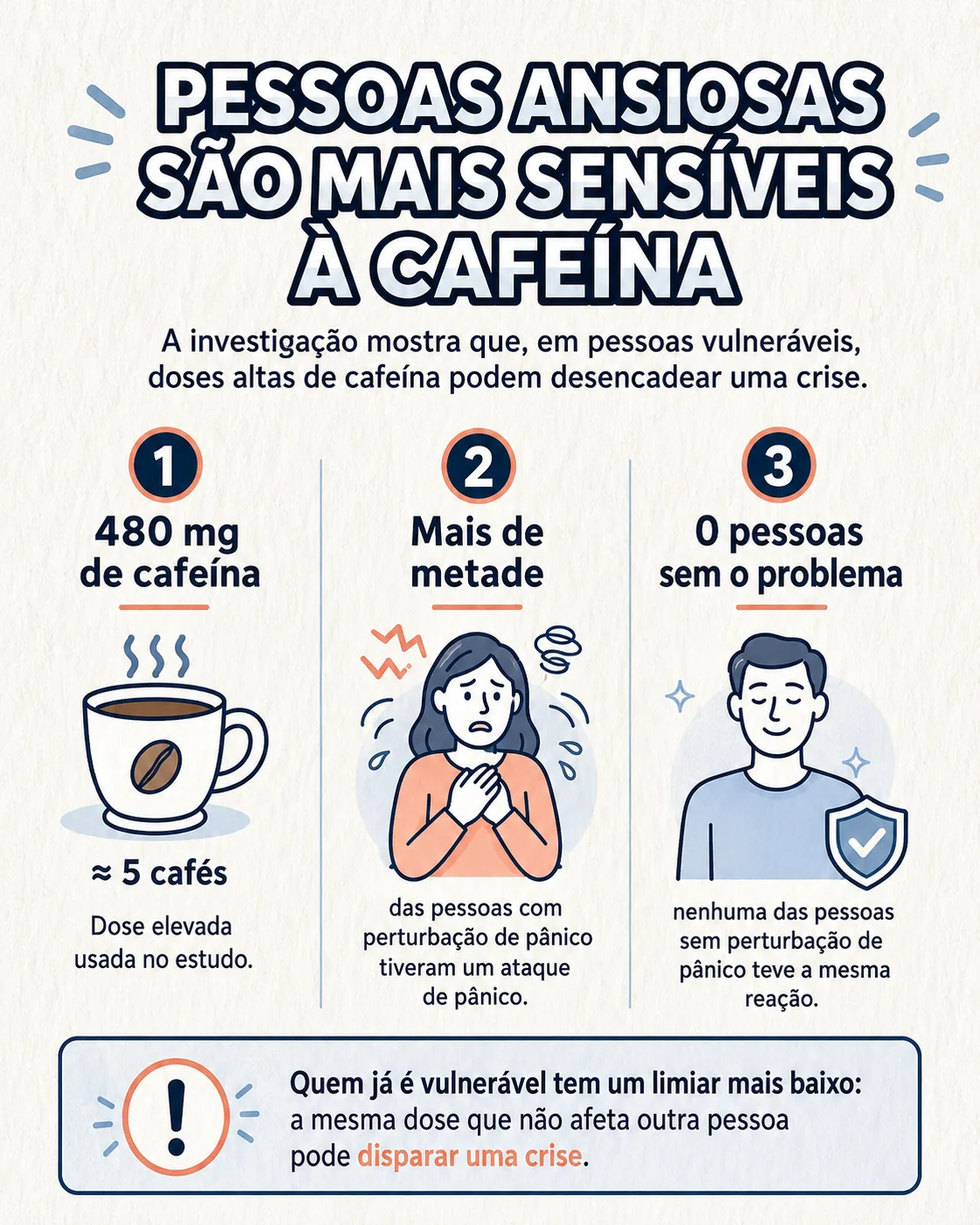
The research is clear on this point. In a baseline study, a high dose of caffeine (around 480 mg, the equivalent of 5 coffees) triggered a panic attack in more than half of those with panic disorder — and in none of those without the condition.
Who is already vulnerable It has the lowest “threshold”: the same dose, which has no effect on someone else, can trigger a seizure.
When Is It Too Much? Dosage and Individual Tolerance
For a healthy adult, up to 400 mg a day (around 4 cups of coffee) is generally considered safe. However, for people with anxiety or panic attacks, this amount is often too high.
There is no magic number: tolerance varies depending on genetics, weight, sleep and stress levels. You won’t find a better guide than your own body.
Hidden Sources of Caffeine
Coffee (in a cup or a glass) is the obvious suspect, but caffeine is hidden in many places:
- black tea and green tea (contain theine, exactly the same molecule caffeine – C₈H₁₀N₄O₂)
- soft drinks and energy drinks
- dark chocolate
- certain painkillers and cold remedies
- “pre-workout” supplements and weight-loss products
All in all, it’s easy to take too much which they think they are consuming.
How to Lose Weight Without Suffering from Withdrawal Symptoms
Suddenly cutting out caffeine causes headaches, irritability and fatigue — withdrawal symptoms which, ironically, mimic anxiety itself.
The solution is to reduce gradually: Cut down by one cup at a time, over the course of one to two weeks, and replace it with decaffeinated coffee or caffeine-free herbal teas. A slow and gradual reduction prevents your body from going into shock.
Other Stimulants to Watch Out For
Caffeine isn’t the only one.
There are others neurostimulants, such as nicotine, certain nasal decongestants, and various substances used for “energy” or focus that have a similar stimulating effect and may trigger crises in sensitive individuals. It’s always worth reading the labels.
Caffeine, Sleep and the Anxiety Cycle
Here is the most underestimated vicious circle.
Caffeine stays in the body for a long time — half the dose is still circulating 5 to 6 hours later.
A cup of coffee in the late afternoon robs you of hours of deep sleep, and a poor night’s sleep makes the brain more reactive the following day, reducing resistance to anxiety — which often leads to… drinking more coffee.
Taking care of your sleep is essential part to break this cycle.
🧠 Key Points to Retain
- Caffeine blocks adenosine and increases adrenaline, putting the body into a state of alertness similar to that caused by the presence of a physical threat.
- Its effects — palpitations, tremors, restlessness — mimic the symptoms of a panic attack.
- High doses (over 480 mg) triggered panic attacks in more than half of those with panic disorder, but in none of the healthy individuals.
- Up to 400 mg a day is safe for most people, but it is usually too much for those suffering from anxiety — tolerance varies from person to person.
- There is caffeine hidden in tea, fizzy drinks, chocolate and medicines; cut down gradually to avoid withdrawal symptoms.
- When misused, caffeine disrupts sleep and fuels anxiety — making sure you get enough rest helps to break the cycle.
FAQs – Frequently Asked Questions
Do I have to give up coffee completely if I suffer from panic attacks or anxiety?
Not necessarily. Many people have one or two cups in the morning without any problems. The aim is to find your limit and avoid caffeine in the afternoon and evening. For some people, particularly those who experience frequent episodes, complete abstinence brings greater stability.
How long does caffeine stay in the body?
The so-called “half-life” of coffee is around 5 to 6 hours: half of it is still active during this period, and it can take 10 hours or more for it to disappear completely. For this reason, a cup of coffee at 4 pm can affect your sleep that very night.
Is decaffeinated coffee safe?
Generally speaking, yes. Decaffeinated coffee contains only trace amounts of caffeine — a tiny fraction of that found in a normal cup of coffee. It’s a good way to enjoy the ritual without the stimulating effect.