Skip to content


Drooping Eyelid: What Might Be Causing It
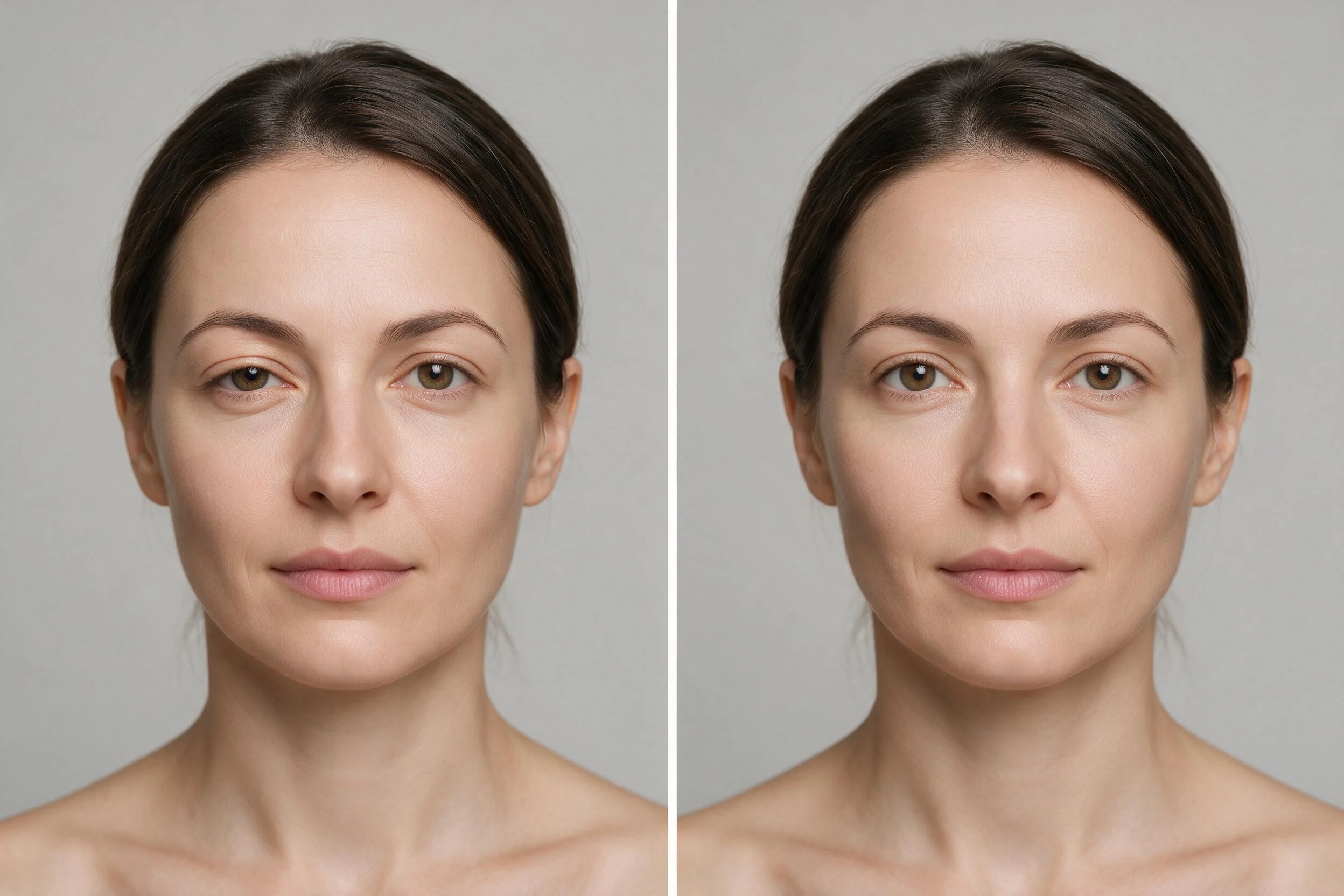
Ptosis It is the medical term for drooping of the upper eyelid.
It can affect one eye or both; it may be slight — just a slightly more “dull” look — or marked to the point where it covers part of the pupil and restricts vision. Many people first notice it in a photograph, or because someone comments that they look tired.
When the drop is significant, the body compensates without the person realising it: the eyebrows are raised, the forehead is furrowed, and the head is tilted back slightly to see from beneath the eyelid.
This constant tightening of the forehead causes, in itself, tiredness and headaches at the end of the day. It is worth paying attention to these signs — they show that the eyelid is actually obstructing your vision, and it is not just a cosmetic issue.
The Most Common Causes of Ptosis
A drooping eyelid can have a variety of causes. These are the most common:
- Ageing (aponeurotic ptosis): The tendon connecting the levator muscle to the eyelid stretches over the years. This is the most common cause — gradual, symmetrical (in both eyes) and the same in the morning and in the evening.
- Excess skin on the eyelid (dermatocalase): It is not true ptosis. The eyelid lifts normally, but the skin gives the same appearance.
- Congenital ptosis: present from birth, due to incomplete muscle development. In a child, this requires early assessment, as it may impair the development of vision in that eye.
- Mechanical and local causes: A stye (abscess), a cyst or swelling of the eyelid can cause it to droop temporarily. Prolonged use of contact lenses and certain eye surgeries can also cause the tendon to weaken.
- Botulinum toxin (Botox): When it spreads beyond the treated area, it causes ptosis that lasts for weeks and usually resolves on its own.
- Myasthenia gravis: The immune system interferes with the transmission of signals from the nerve to the muscle. The tell-tale sign is the eyelid to float — It improves with rest and worsens with use.
- Acute neurological causes: Damage to the nerve that controls the eyelid (third cranial nerve), often accompanied by pupil abnormalities and double vision, or Horner’s syndrome, which combines mild ptosis with a smaller pupil on the same side. These conditions develop rapidly and require urgent assessment.
How to Find Out Which Category You Fall Into
The diagnosis must be made by a qualified healthcare professional, but there are three questions that form the basis of almost the entire assessment — and which the doctor will ask at the first consultation:
- Did it come on suddenly or over a period of months? What happens in a matter of hours or days is always more worrying than what creeps up on you gradually.
- Is it the same in the morning and in the evening, or does it get worse as the day goes on? A steady decline generally points to mechanical causes or to age; the one that varies suggests myasthenia.
- Does it occur on its own or alongside other symptoms? Double vision, difficulty swallowing, slurred speech or weakness when chewing completely change the clinical picture.
When Eyelid Drooping Worsens Towards the End of the Day: A Sign of Myasthenia
The signing of the myasthenia gravis, a nerve-muscle communication failure, is the fatigue: Weakness increases with repeated exertion and is alleviated by rest.
In the morning, after a night’s rest, the eye is open and there are no signs of a drooping eyelid. As the day goes on, the eyelid gradually droops, and by late afternoon the drooping is clearly visible.
A nap or a few minutes with your eyes closed makes it “rise” again, even though temporarily.
This is very different from age-related ptosis, which remains stable from the start to the end of the day.
In myasthenia, falls are also frequently accompanied by double vision that comes and goes, because the muscles that move the eyes are subject to the same kind of fatigue. In many people, the eyes are the first — and, for some time, the only — sign of the disease.
Warning Signs That Require Immediate Attention
Not all ptosis is an emergency, but there are certain presentations that require specialist assessment as soon as possible:
- drooping eyelid all of a sudden, in hours;
- sudden onset of double vision;
- a severe headache that is different from usual;
- pupils of different sizes or severe pain around the eye;
- weakness, numbness or a lopsided mouth on one side of the body;
- slurred speech.
What Assessment to Carry Out — and What Solutions Are Available
When ptosis is gradual, isolated and stable, the ophthalmologist assesses the condition and determines the course of action: correction is achieved through surgery (reattachment of the levator muscle tendon), and the results are very good.
When the eyelid floats, or if you experience double vision and other symptoms, the course of action is to neurology consultation.
The research includes:
- clinical examination to assess muscle fatigue;
- blood tests to screen for antibodies;
- studies of transmission between the nerve and the muscle.
Myasthenia has been confirmed, treatment is effective and, in most cases, enables patients to lead a life without significant limitations — which makes the speed of diagnosis the most important factor in the outcome.
🧠 Key Points to Retain
- Ptosis is the medical term for a drooping eyelid, and its causes range from ageing to neurological problems.
- The most common cause is age-related ptosis: gradual, symmetrical and stable throughout the day.
- Not every drooping eyelid is ptosis — excess skin on the eyelid can create the same appearance without affecting the muscle.
- Ptosis that improves in the morning and worsens towards the end of the day is a typical sign of myasthenia gravis, particularly when accompanied by fluctuating double vision.
- Raising your eyebrows or tilting your head back are signs that your eyelid is actually obstructing your vision.
- Sudden drooping of the eyelid accompanied by double vision, a severe headache, unequal pupils or weakness on one side of the body is a medical emergency — call 112.
- Taking photos of yourself when you wake up and at the end of the day for a week helps to track fluctuations and speeds up diagnosis.
FAQs – Frequently Asked Questions
Is a sudden drooping eyelid a serious condition?
That may be the case. Ptosis that develops over a period of months or years is usually caused by benign, age-related factors. But a drooping eyelid all of a sudden, particularly if you experience double vision, a severe headache, pupils of different sizes or weakness on one side of the body, immediate medical attention is required — call 112. In such cases, it is necessary to rule out acute causes such as an aneurysm or a stroke.
Why does it get worse at night and better in the morning?
This pattern is characteristic of myasthenia gravis. The transmission of signals from the nerve to the muscle progressively fails with use: in the morning, after a night’s rest, the muscle responds well; throughout the day, repeated use depletes this transmission and the eyelid gradually droops. It is the fluctuation, rather than the drooping itself, that guides the diagnosis.
Is a drooping eyelid in just one eye different from having it in both?
Yes, it helps to guide the diagnosis. A symmetrical, gradual decline on both sides suggests ageing. If it is on one side only, this increases the likelihood of a neurological or local cause. In myasthenia gravis, it can affect one side, both sides, or even switch sides over time — variable asymmetry is, in fact, highly suggestive of the condition.
My son has one drooping eyelid. Should I be worried?
You should take them to see an ophthalmologist – there’s no need to panic, but don’t put it off. Congenital ptosis is relatively common and treatable, but when it covers part of the pupil, it can prevent the normal development of vision in that eye. If assessed early, it responds well to treatment.
Which doctor should I see for a drooping eyelid?
If the ptosis is gradual, isolated and without any other symptoms, an ophthalmologist will assess the condition and provide guidance. If the eyelid position varies throughout the day, worsens with tiredness, or is accompanied by double vision, difficulty swallowing or weakness, a neurologist is the appropriate specialist to consult. And if the drooping is sudden, with the warning signs described, do not book an appointment — go straight to A&E.