Skip to content


Preventing crises: a new approach to brain health
Some people seek help when their concentration has already started to fail, fatigue has become a constant feature of their lives, or they begin to worry about their memory.
Until then, it’s easy to dismiss these signs as an inevitable part of ageing, work or the pace of life. But is it reasonable to wait for a crisis to strike before we start looking after our brains?
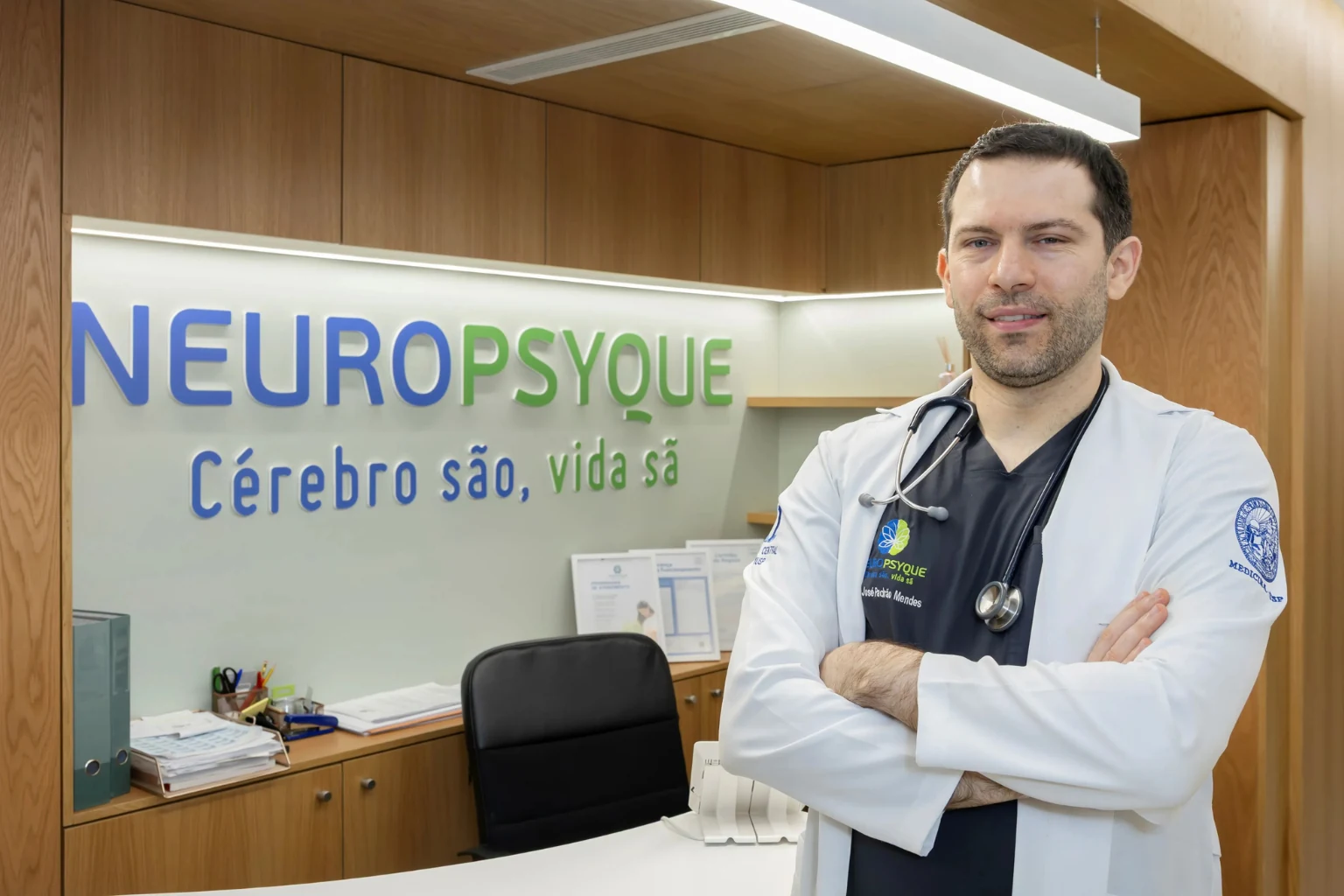
It is this concern that has led the neurologist e neuropsychiatrist Dr José Padrão Mendes suggests, in a cover interview with Business Voice, a different way of thinking about mental and brain health. The discussion does not offer a single answer. On the contrary, it challenges many of the divisions we have become accustomed to.
Can the brain be treated in sections?
For the founder and Clinical Director of NeuroPsyque, a diagnosis or a test, on its own, does not always address what a person and their family really need. In the interview, he explains it as follows:
“The biggest challenge has been to show that the brain cannot be treated in isolation. A child with ADHD needs more than just a diagnosis. An adult with memory loss needs more than just a test. A family with a child on the autism spectrum needs more than just answers — they need guidance, structure and hope.”
This passage raises a wider issue: what changes when neurology, psychiatry, psychology, neuropsychology, nutrition and neuromodulation technologies do they cease to function as separate compartments?
José Padrão Mendes discusses the results he observes at different stages of life, but also the obstacles to a truly integrated approach to medicine.
Understand before administering medication
The conversation becomes particularly forthright when it turns to the overuse of medication. The doctor does not reject medication when it is necessary; rather, he questions whether it should be prescribed before a thorough understanding has been established:
“Many children are given medication before they are given understanding. Many adults are given pills before they are given explanations. Many elderly people are given diagnoses before they are given hope.”
This is where neurofeedback, transcranial magnetic stimulation, tDCS and artificial intelligence come into play. These are tools that can help us observe and intervene with greater precision, but they are no substitute for the clinical relationship. The quote from the interview sums up this balance: “Technology is our telescope, but the gaze is human.”
More incentives, less regulation
There is also a question that is hard to ignore: in a hyper-connected world, are we better informed or more anxious? The answer begins with a brief observation — “We’re more motivated, but less regulated” — and examines the effects of this rhythm on children, adults and the elderly.
From prevention to cognitive resilience, via stigma and the increasingly blurred line between neurology and psychiatry, the interview offers several insights into a paradigm shift.
At the heart of it all is a simple invitation: “We need to make brain care as commonplace as we have made physical care.”
This text includes only a few excerpts from the conversation. To read the full interview with Dr José Padrão Mendes in Business Voice, Read the full interview here.