Skip to content



Morning Headaches: What the Science Says
A headache that appears at the moment of waking up - clinically referred to as morning headache - affects approximately one in thirteen people worldwide. It's often a sign that something didn't go right during the night.
During sleep, the brain performs essential functionsThe brain: consolidates memories, regulates hormones, repairs tissues and eliminates metabolic waste. When this process is compromised, the brain wakes up in pain. A headache is one of the ways it communicates this imbalance.

The Most Common Causes of Waking Up with a Headache
Sleep disorders (especially obstructive apnoea)
A obstructive sleep apnoea is one of the most relevant and most underdiagnosed causes of morning headaches. It is a condition in which breathing is interrupted repeatedly during the night due to the temporary collapse of the airways. It is estimated that between 6 to 17% of the adult European population suffers from apnoea, with the problem being more common after the age of 50 and in people who are overweight.
When breathing stops, even for a few seconds, oxygen levels in the blood drop and carbon dioxide rises. This chemical change causes dilation of cerebral blood vessels, And that's where the throbbing pain around the skull comes from first thing in the morning.
Bruxism and Muscle Tension
Grinding or clenching your teeth in your sleep - so-called bruxism - overloads the muscles of the jaw, neck and scalp. Resultstension headache, which feels like a “tight band” around the head, often accompanied by neck and jaw pain.
Insomnia and Unrefreshing Sleep
Sleeping too little or too much can trigger morning headaches.
A insomnia and sleep deprivation alter the regulation of neurotransmitters involved in pain control - chemicals such as serotonin, These systems help the brain to “filter out” painful stimuli. When this system fails, the threshold for feeling pain drops. In other words, the central nervous system becomes more sensitive to pain, This can aggravate and explain the headaches.
Anxiety, Depression and Chronic Stress
There is a strong relationship between mental health and morning headaches.
A anxiety and depression fragment sleep, increase nocturnal muscle tension and deregulate the stress axis. O cortisol - the stress hormone - naturally peaks in the early hours of the morning, and in anxious people this peak can be exaggerated, contributing to pain.
Other common causes
A dehydration, o excessive consumption of caffeine or alcohol, o prolonged use of painkillers (which can cause “rebound” headaches after the effect has worn off), migraines with a morning pattern and poorly controlled hypertension are other common factors.
When Should You Worry?
Waking up punctually with a headache after a difficult night is one thing. Waking up with a headache on a recurring basis - several times a week, or daily - is a clear sign that it's worth investigating, by making an appointment with a doctor. neurology consultation.
Warning signs that warrant medical consultation include:
- Morning headache more than three times a week
- Pain that wakes you up at night
- Heavy snoring, breathing pauses noticed by partner or daytime sleepiness
- Changes in vision, speech or muscle strength
- Pain that gets progressively worse over the weeks

How Neuroscience is Changing Treatment
The good news is that the approach to these headaches has come a long way.
It's no longer just a question of “taking a pill”. Modern medicine understands the morning headache as a symptom, This requires careful investigation, with sleep studies and neurological and neuropsychological assessments.
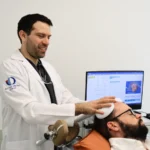
Technologies such as Transcranial Magnetic Stimulation (TMS) use magnetic fields to modulate the activity of specific brain regions, is one of the most effective approaches to treating chronic migraines and resistant sleep disorders.
These tools exemplify how neuroplasticity - the brain's ability to reorganise itself - can be used in favour of those who suffer.
Key Points to Retain
- Waking up with a headache is not normal, especially if it happens on a recurring basis.
- The most frequent and under-diagnosed cause is obstructive sleep apnoea, which affects millions of people.
- Bruxism, insomnia, anxiety, depression and dehydration are other relevant factors.
- The symptom must be investigated, It's not just masked by painkillers - excessive use of these can even make the problem worse.
- Innovative therapies such as Transcranial Magnetic Stimulation offer effective alternatives without pharmacological dependence.
- Seeking specialised help is the first step towards making the morning what it should be: a fresh start, not suffering.
Frequently Asked Questions
Is waking up with a headache once a week serious?
It's not necessarily serious, but it deserves attention. If it happens regularly, it's important to identify the trigger - insufficient sleep, alcohol, stress - and consider medical assessment if the pattern continues.
How do I know if I have sleep apnoea?
Signs include heavy snoring, breathing pauses during the night (usually noticed by the partner), excessive daytime sleepiness and morning headaches. The diagnosis is confirmed by a polysomnography.
Does taking a painkiller every day solve the problem?
On the contrary. Excessive use of painkillers can cause rebound headaches, in which the medication itself causes pain. Treating the cause is always preferable to masking the symptom.
Does the position in which I sleep influence me?
Yes. sleep quality is affected by inappropriate positions, mismatched pillows or very soft mattresses, which can cause neck strain and contribute to morning headaches.
When should I see a specialist?
Whenever the pain is frequent (more than three times a week), intense, progressive or accompanied by other symptoms such as drowsiness or cognitive changes. The sooner it is investigated, the sooner it is treated.