Skip to content


Today, 11 April, is World Food Day. Parkinson's disease. A date that honours James Parkinson, the English doctor who first described “agitating paralysis” in 1817. More than two centuries later, the disease that bears his name remains one of the greatest challenges facing modern neuroscience.
In Portugal, it is estimated that around 20,000 people live with Parkinson's. Worldwide, there are more than 8.5 million - and that number has been duplicate in recent decades. It's a disease that doesn't choose a profession or personality, and which silently and progressively transforms the lives of those who have it and those who care for them.
This date serves to open up conversations, reduce stigma and remind us that science is moving forward. There are more reasons for hope today than there were ten years ago.
What Is Parkinson's Disease Anyway?
A Parkinson's disease is a degenerative neurological disease - a condition in which certain cells in the nervous system progressively deteriorate. The central problem occurs in a region of the brain called black substance, responsible for producing dopamine.
Dopamine is a neurotransmitter (a kind of chemical messenger) essential for controlling voluntary movements. When the neurons that produce it start to die, the brain gradually loses its ability to control voluntary movements. coordinate movement fluidly and precisely.
It's second most common neurodegenerative disease, It's the same as Alzheimer's. And contrary to what many people think, it's not just a “tremor disease”.
The Symptoms You See - and Those You Hide
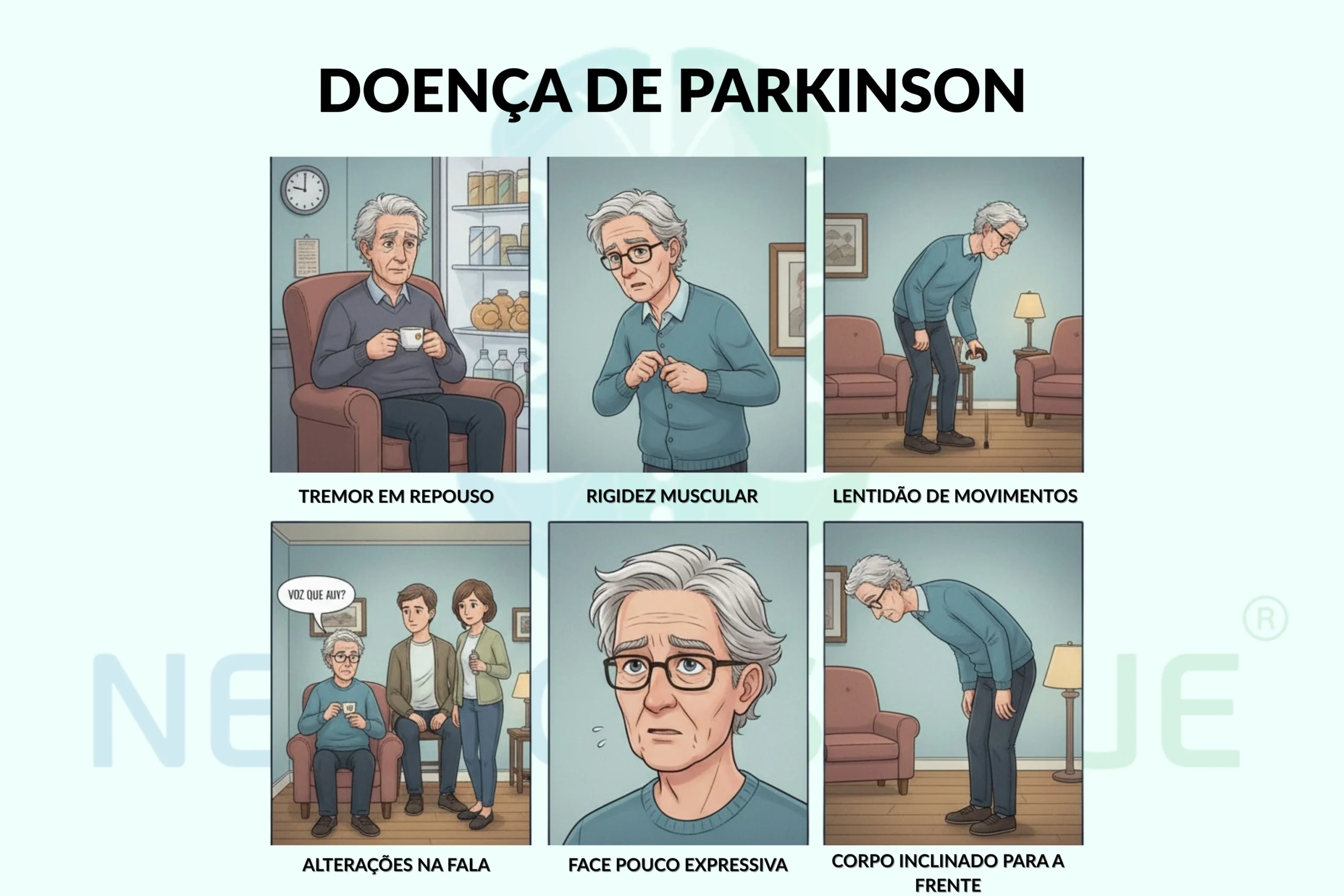
When we think of Parkinson's, the image is almost always of someone with shaking hands. But the reality is much more complex, and it's important to know this, because many symptoms go unnoticed for years.
Motor Symptoms
- Tremor at rest - in 70% of cases, the first sign is a localised tremor, often in one hand, which appears when the limb is relaxed
- Muscle stiffness - a feeling of resistance or “locking” in the muscles
- Bradykinesia - slowness of movement; simple tasks such as buttoning a shirt become time-consuming and difficult
- Changes in gait - small, dragging steps, difficulty initiating movement (the so-called “freezing”, or freezing of the gear)
Non-Motor Symptoms - The Quietest
Parkinson's goes far beyond movement. Depression and anxiety (up to 40% patients), sleep disorders, cognitive changes e digestive difficulties are equally frequent symptoms - and can appear before of the most obvious physical signs. Recognising them can make all the difference to an earlier diagnosis.
Parkinson's: A Disease That Doesn't Warn
The disease usually manifests itself from the age of 60, but about 10% of cases occur before the age of 50 - the so-called Early onset Parkinson's. It affects both sexes, with a slight predominance in men, and the causes point to a combination of genetic and environmental factors.
How is Parkinson's treated today?
Parkinson's has no cure, but there are effective treatments to preserve quality of life and autonomy. The basis is pharmacology, with medicines that compensate for the lack of dopamine; In selected cases, the deep brain stimulation brings additional benefits. And the science doesn't stop there.
Neuroplasticity as an Ally: The Role of Neurotherapies
The brain has an extraordinary ability to adapt and reorganise - what we call neuroplasticity - and Parkinson's, it can be stimulated and used to delay the worsening of the disease.
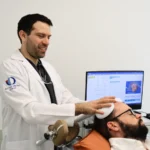
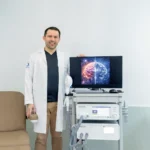
One of the most researched approaches is the Transcranial Magnetic Stimulation (TMS) - a non-invasive technique that uses magnetic fields to modulate specific regions of the brain, without surgery or hospitalisation. The evidence shows benefits on:
- Motor symptoms - improved slowness of movement and reduced freezing of gait
- Depression - which affects around 40% patients and, when treated, significantly improves overall quality of life
- Cognitive functions - attention, concentration and problem-solving skills, which are often compromised
The best results come when EMT is performed with active rehabilitation - taking advantage of the window of greater brain responsiveness immediately after stimulation, in a synergy that represents one of the most promising paths of clinical neuroscience current.
At NeuroPsyque, the philosophy is treat the whole personThe aim is to combine pharmacology with technology and the latest therapeutic tools, and to accompany each journey individually, closely.
What's Within Your Reach Every Day
For anyone living with Parkinson's - or caring for someone with the disease - the research is clear: regular physical exercise, quality sleep, cognitive stimulation, active social life and a diet rich in antioxidants and omega-3s make a real and measurable difference. These habits are not a substitute for medical treatment - complement it in a powerful way. Find out more in our Complete Guide to Parkinson's Disease.
Key Points To Retain
- World Parkinson's Day (11 April) commemorates James Parkinson, who first described the disease in 1817; in Portugal, it affects around 20,000 people
- Parkinson's results from the progressive loss of neurons that produce dopamine in the black substance of the brain
- The symptoms go far beyond tremor: stiffness, sluggishness, depression and cognitive and sleep disorders are just as frequent
- There is no cure, but treatment preserves quality of life,and the options continue to evolve
- A EMT (Transcranial Magnetic Stimulation) is a complementary non-invasive approach with promising results in motor symptoms, depression and cognition
- Exercise, sleep, cognitive stimulation and social life are powerful allies in everyday life
Frequently Asked Questions
Is tremor always the first symptom of Parkinson's?
No. Although it's the first sign in about 70% of cases, In addition, there are forms in which rigidity or slowness predominate. Non-motor symptoms - such as sleep disturbances or mood swings - are also present. can appear years before the physical signs.
What is EMT and how can it help Parkinson's?
A Transcranial Magnetic Stimulation uses magnetic fields to modulate specific regions of the brain in a non-invasive way. In Parkinson's, it has shown benefits on slowness, freezing of gait, depression and cognitive functions - especially when combined with active rehabilitation.
When should I see a specialist?
Faced with signs such as tremor at rest, unexplained stiffness, progressive slowness, sleep disturbances or persistent mood swings - especially over the age of 50. Early diagnosis is crucial to preserving autonomy and quality of life.