Skip to content


Can a child’s brain learn to regulate itself more effectively?
When a child is easily distracted, sleeps poorly or reacts strongly to frustration, it is natural for parents to seek answers.
But it isn’t always easy to work out what’s going on.
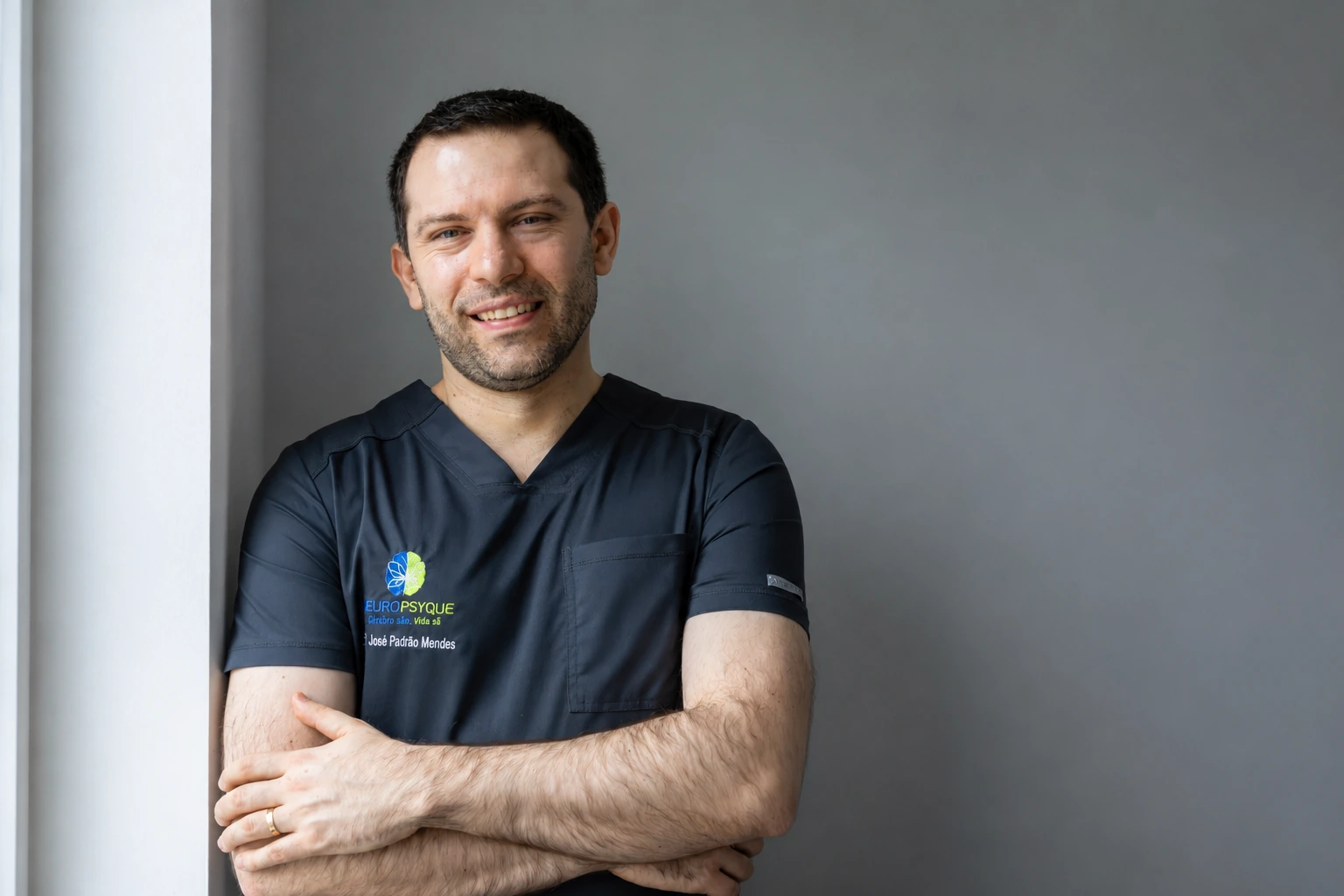
In an interview with Business Voice, the neurologist and neuropsychiatrist Dr José Padrão Mendes introduces an option that is still little known to many families: the Neurofeedback.
Technology does not promise instant solutions. But it does make the most of a an extraordinary feature of the brain: the ability to learn and to adapt.
Behavioural training that begins with measurement
The term “neurofeedback” may sound complicated, but the explanation given in the interview is straightforward:
“Using sensors placed on the scalp, we monitor the brain’s electrical activity and convert this information into visual or auditory stimuli that the child sees on a screen. When the brain is functioning in a balanced way, the game or video progresses; when it becomes unbalanced, the stimulus is reduced.”
Sensors do not send signals to the brain: they simply read its activity.
É the brain itself which receives feedback on how it is performing and learns through minor adjustments.
José Padrão Mendes compares this process to learning to ride a bike — a simple illustration of a technique based on the brain’s natural neuroplasticity.
A neuroplasticity, the possibility of “to shape” the brain and its behaviour, is at its peak during childhood and adolescence — this is why the neurodevelopmental conditions in children and young people in a different way.
What might change in our daily lives?
The interview covers difficulties such as ADHD, anxiety, sleep disorders, learning difficulties and emotional regulation.
Rather than simply listing conditions, it shows how improved brain organisation can become apparent in a child’s life:
“Teachers and parents report improvements in reading, writing, working memory and the ability to follow instructions. When the brain is more stable, learning is no longer a struggle but becomes an opportunity.”
How are these results achieved? The doctor describes a protocol that begins with a clinical assessment and brain mapping, moves on to a personalised plan, and includes regular progress checks.
It also explains when the first changes might become apparent, how many sessions are usually required, and why family involvement influences the process.
No shocks, no magic
There are two myths that the conversation dispels outright. The first is that the equipment “gives electric shocks”: “False. The device simply reads brain activity.” The second is that the Neurofeedback It works like magic. The answer is just as clear: “No. It’s science, training and consistency.”
Straddling technological curiosity and parents’ legitimate concerns, the interview provides an accessible explanation of safety, scientific evidence, the recommended age and possible integration with other therapies.
And it conveys an important message: “I would say that they don’t need to wait for the difficulties to get worse before taking action.”
This text gives just a glimpse of the conversation. To read the full interview with Dr José Padrão Mendes, please visit Business Voice, Read the full interview here.