Skip to content



The brain sends signals before forcing us to stop
We are living in times of greater stress, greater anxiety due to accumulated fatigue, and more cases of burnout being seen in doctors’ surgeries.
We know why, at least in part.
The “hyperconnectivity” — the fact that we are constantly exposed to news and new developments that cause stress, and are always reachable via technologies that facilitate communication — is perhaps the main factor.
The speed at which the modern world moves, too.
But even so, why isn’t burnout prevented? Why don’t we break this cycle of mounting stress and mental fatigue before it becomes destructive?
The answer is simpler than it seems: because, in fact, the underlying problem is that the space now filled by technology, information and entertainment have replaced the ability to “listen” to one’s body — of being in touch with the most basic mechanisms of how it works, which tell us that something is not right and needs to be changed.
This “attention”, which often arises in silence, or during those boring moments when you’re not doing anything, it’s being replaced by constant distractions.
This was one of the topics discussed by the neurologist and neuropsychiatrist José Padrão Mendes in an interview with the magazine Points of View. The discussion challenges a medical approach accustomed to reacting to illness and proposes a different starting point: recognising the signs whilst there is still time to prevent the condition.
Why did we put off asking for help?
Burnout, treatment-resistant depression or cognitive decline do not begin on the day they become obvious and impossible to ignore.
According to the doctor, the nervous system may be under strain for months or years when we finally seek support. Even so, we keep putting it off:
“There is still a perception that asking for help at an early stage is a sign of weakness. And we’ve got into the habit of rationalising symptoms — extreme tiredness as “stress”, memory lapses as “age”. We only come to a halt when our body or mind forces us to stop. But the brain gives warning signs long before that.”
What are these symptoms? The interview mentions persistent tiredness, memory problems and a loss of ability to cope with previously routine everyday tasks, but it does not provide a fixed list — because it doesn’t exist.
Instead, it proposes a criterion which helps you recognise when a difficult phase may require specialist attention.
When does it stop being just a phase?
“The criteria are defined by duration and impact. If symptoms persist for weeks and begin to affect work, relationships or enjoyment of daily activities, this is a sign that the person needs specialist support.”
This response shifts the focus from the label to the real, day-to-day impact.
You don’t have to wait for a serious diagnosis to take your suffering seriously.
Also that’s not enough to view the mind in isolation: José Padrão Mendes explains how the chronic stress interacts with the immune and cardiovascular systems and the microbiome, and why separating neurology, psychiatry and psychology may limit the answer.
What are we taking away from the brain?
The interview links current anxiety and exhaustion to a state of continuous hyperstimulation.
Notifications, work-related pressure and a lack of breaks keep the body on high alert, whilst essential habits fall by the wayside: “We are lacking the ‘basic fuel’: rest, sunlight, movement and silence.”
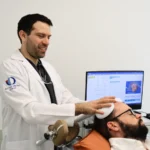
The discussion extends to cognitive ageing, the role of families as the first “sentinels” and the possibilities opened up by brain mapping and neurotherapies.
Technology and prevention go hand in hand, but the ultimate message is profoundly human: “Protect your brain — it holds your memories, creativity, independence and capacity to love. Don’t wait until it breaks down.”
This text gives just a glimpse of the conversation. To read the full interview with Dr José Padrão Mendes in the magazine Points of View, Read the full interview here.