Skip to content



Have you ever woken up with a strange sensation in your feet - as if you were stepping on cotton wool, or as if thousands of tiny needles were running through your toes? Perhaps you've noticed that your hands have dropped objects without explanation, or that walking in the dark has become an unexpected challenge.
If these experiences are familiar to you, you're not alone.
A peripheral neuropathy affects around 8% of the Portuguese population.
The good news? With the right knowledge and the right support, it is possible to find ways to regain quality of life.
What is peripheral neuropathy?
Imagine your nervous system as a vast communications network. The brain and spinal cord function as the main centre, while the peripheral nerves are the cables that carry messages throughout the body.
Peripheral neuropathy arises when these “cables” become damaged. As a result, communication between the brain and the rest of the body is compromised - messages arrive distorted, incomplete, or simply not at all.
This condition can affect nerves sensory (responsible for sensations such as pain and temperature), motors (which control movement) and autonomous (which regulate involuntary functions). Prevalence increases significantly with age and can reach up to 30% of people after the age of 70.
What causes peripheral neuropathy?
Peripheral neuropathy rarely comes out of nowhere. In most cases, there is an underlying cause, and identifying it is the first step towards effective treatment.
A diabetes tops the list of causes in developed countries. High blood sugar levels progressively damage peripheral nerves, affecting more than half (>50%) of people with diabetes throughout their lives.
The vitamin deficiencies, vitamins, particularly B-complex vitamins, also play an important role. These vitamins are essential for nerve health, and a lack of them can jeopardise nerve function.
Other common causes include autoimmune diseases (such as lupus or Guillain-Barré syndrome), infections (HIV, hepatitis C), trauma and exposure to toxic substances, including some chemotherapy drugs.

What are the symptoms of peripheral neuropathy?
Symptoms usually set in gradually, typically starting at the toes and slowly progressing towards the torso.
The most common manifestations include tingling, dormancy e neuropathic pain - often described as burning, electric shock or needles. Many people report that the pain gets worse at night, disturbing their sleep.
As the condition progresses, motor changes can appear: muscle weakness, difficulty walking, frequent cramps e balance problems - increasing the risk of falls.
When the autonomic nerves are affected, the following can occur changes in perspiration, digestive problems or variations in blood pressure.
If you recognise some of these symptoms, seek medical assessment.
Early diagnosis really makes a difference.
How is peripheral neuropathy treated?
The treatment is based on two pillars: treat the underlying cause e relieve symptoms.
When there is a treatable cause - such as uncontrolled diabetes or vitamin deficiency - intervention can halting progress and, in some cases, allow significant recovery. Replacing vitamin B12, for example, can completely reverse a neuropathy caused by its deficiency.
To control neuropathic pain, treatments include: pharmacological therapy (antidepressants, anticonvulsants and topical analgesics), neurotherapy (neuromodulation) e specialised physiotherapy, This is crucial for maintaining muscle strength, improving balance and preventing potential falls.
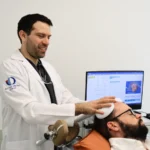
To refractory cases, the therapies of neurotherapy are particularly important. A Transcranial Magnetic Stimulation and other neuromodulation techniques modulate the activity of the nervous system in a non-invasive way, offering relief to patients who have exhausted or simply cannot tolerate other options.
If has unanswered questions, and if seeks to delve deeper into the subject and better understand the condition, its impact on daily life, the difference to other types of pain, how the diagnostic process works and the advances in scientific research into new treatments for the condition, read this article. Complete Guide to Neuropathic Pain.
Can peripheral neuropathy be cured?
The honest answer is: it depends.
In some cases - when the cause is a vitamin deficiency, a treatable infection or nerve compression - full recovery is possible. Nerves are capable of regeneration, although this process is considerably slower than the recovery of muscle tissue or skin, for example.
In other situations, such as diabetic neuropathy long term, the damage can be partially irreversible. However, with proper treatment, it is possible halting progress, It also helps to significantly reduce symptoms and restore quality of life.
Early diagnosis is crucial. The sooner the cause is treated, the better the chances of preserving nerve function. A neuroplasticity - the nervous system's ability to adapt - works in our favour when we give it the right conditions and stimuli.
Key Points To Retain
- Peripheral neuropathy results from damage to the nerves that connect the brain to the rest of the body, affecting sensitivity, movement or automatic functions
- Diabetes is the most common cause, but there are more than 90 possible causes, including vitamin deficiencies and autoimmune diseases
- Typical symptoms include tingling, numbness, burning pain, muscle weakness and balance problems
- Treatment combines addressing the cause with strategies to relieve symptoms, including medication, physiotherapy and innovative neurotherapy techniques
- Early diagnosis is key - the sooner we intervene, the better the results
Frequently Asked Questions
Can peripheral neuropathy affect young people?
Yes. Although it is more common after the age of 40, it can affect any age - especially when associated with type 1 diabetes, autoimmune diseases or hereditary causes.
Is it possible to prevent peripheral neuropathy?
In many cases, yes. Keeping diabetes under control, avoiding excessive alcohol consumption and ensuring a balanced diet rich in B vitamins significantly reduces the risk.
What tests are needed for diagnosis?
Diagnosis is based on clinical assessment, complemented by electroneuromyography (which assesses nerve conduction), blood tests and sometimes magnetic resonance imaging.
Does physiotherapy help with peripheral neuropathy?
Absolutely. It's fundamental for maintaining muscle strength, improving balance, preventing falls and optimising function in everyday activities.
What is neurotherapy and how can it help?
Neurotherapy includes techniques such as Transcranial Magnetic Stimulation, which modulate the activity of the nervous system in a non-invasive way. These approaches show promising results in controlling neuropathic pain, especially in cases that are resistant/refractory to conventional treatments.