Skip to content



FOBIAS - Treatment in Lisbon
Specialised assessment and treatment for Phobias in Lisbon
WHAT ARE PHOBIAS?

A state of inhibition
A phobia is an intense, irrational and persistent fear of a specific object, situation, activity or animal. While ordinary fear is a natural response to a real danger, a phobia triggers a panic and alarm reaction out of proportion to the threat. This state drives the person to extremes to avoid what they fear, severely limiting their freedom and quality of life.
Most common manifestations
- Anticipatory AnxietyAcute suffering just thinking, imagining or predicting that you might encounter the trigger of your phobia.
- Avoidance BehaviourDrastic changes to routines (not flying, avoiding lifts, social isolation) so as not to confront the phobia.
- Immediate Physical ReactionsSweating, tremors, tachycardia, shortness of breath and the uncontrollable urge to flee when exposed to the feared situation.
- Recognising IrrationalityThe person is usually aware that their fear is exaggerated, but they feel powerless and unable to control it.
MAIN TYPES AND TRIGGERS
Specific Phobias
Fear of animals (e.g. spiders, dogs), the natural environment (heights, storms), blood/injections, or specific situations (flying, enclosed spaces/claustrophobia).
SpecificSocial Phobia (Social Anxiety)
Intense and paralysing fear of social situations, of being judged, humiliated, embarrassed or being the centre of attention in front of others.
SocialAgoraphobia
Fear of being in places or situations from which it would be difficult to escape or get help in the event of panic (crowds, bridges, public transport, very open spaces).
AgoraphobiaOrigins and Causes
They often result from past traumatic experiences, genetic factors, neurochemical imbalances or behaviours learned in childhood.
Causes
Regardless of the type or severity, the pattern of behaviour is the same: constant anticipation and systematic avoidance.
EFFECTIVENESS IN TREATMENT
THE PHOBIES
High success rates through systematic desensitisation and integrated approaches
* Data based on global clinical evidence in the treatment of anxiety disorders and phobias. Results depend on individual adherence.
Sources: clinical data, Cuijpers P et al. (2019), JAMA Psychiatry - meta-analysis of 375 RCTs: CBT for specific phobias with effect size 1.17; Wolitzky-Taylor KB et al. (2008), Clin Psychol Rev - meta-analysis: 70-85% of significant clinical improvement with exposure therapy; APA, PubMed.


THE IMPORTANCE OF FACING FEAR
Avoidance is the real fuel of any phobia. Every time a person changes their routine to avoid facing the feared situation, they get immediate relief, but paradoxically this reinforces the fear in the long term. Over time, the phobia tends to generalise and become increasingly restrictive. A specialised psychiatric and psychological assessment is the essential step towards breaking this prison cycle.
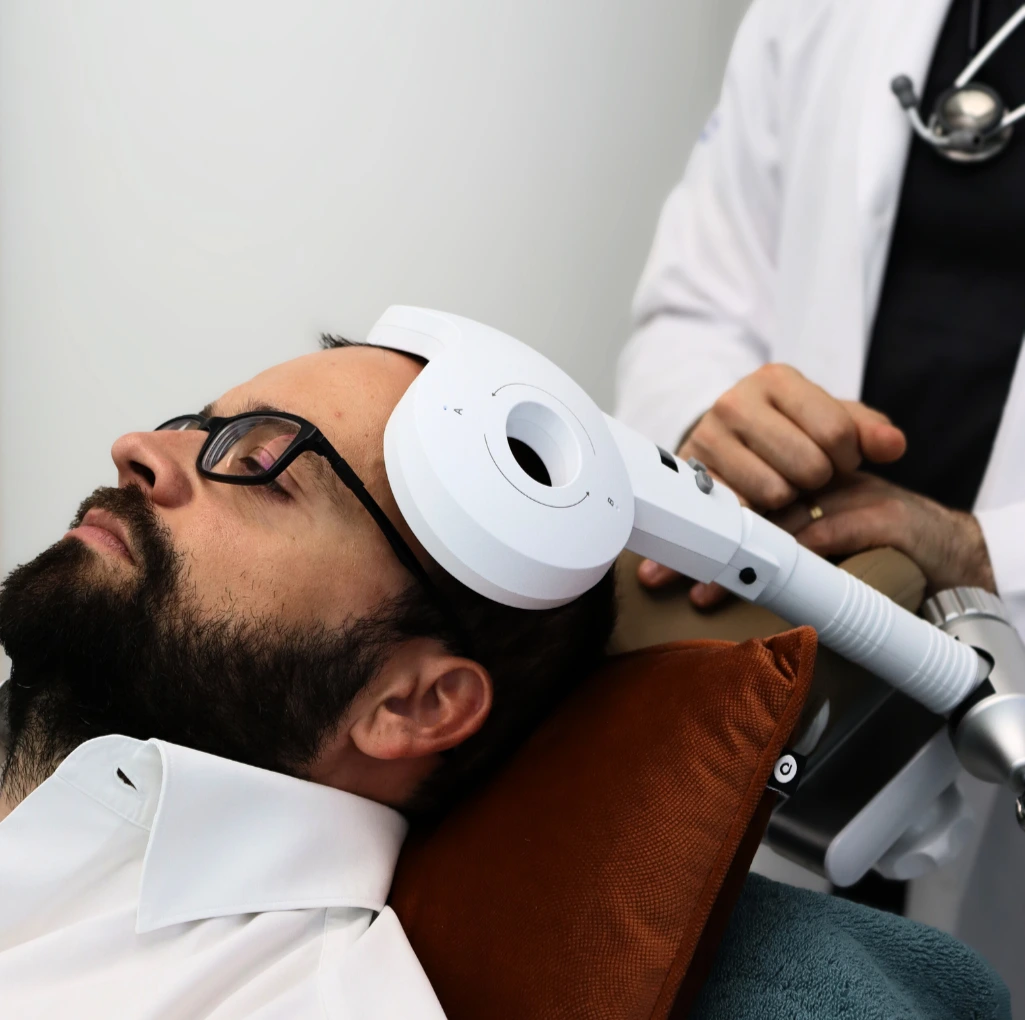
At NeuroPsyque, we use the most scientifically valid intervention methodologies, namely structured exposure Cognitive Behavioural Therapy (carried out in a completely safe and gradual manner). For severe agoraphobia or intense social phobia, we integrate pharmacological intervention or neuromodulation (EMT) to calm the brain's alert circuits. The aim is for you to regain your freedom.
FAQ's about Phobias
What's the difference between a normal fear and a phobia?
How does treatment work for specific phobias?
Will I be forced to face my fear at the very first appointment?
Can phobias disappear on their own over time?
Is it necessary to take psychiatric medication to treat a phobia?
Do I need a medical referral to book an appointment at NeuroPsyque?