



Have you ever felt “butterflies in your stomach” before a stressful situation? Or noticed that your mood changes when your digestion isn't going well? These experiences are no coincidence. Science has discovered that the gut and the brain are in constant conversation. What happens in one profoundly affects the other.
The “Second Brain”: Why is the Gut So Important?
The digestive system has about 500 million neurons — more than the spinal cord. This neuronal network, called the enteric nervous system, is so sophisticated that scientists have dubbed it the “second brain”. But there's more: about 70-80% of the immune system is located in the intestine, and it is also there that the billions of microorganisms that make up the intestinal microbiome.
This microscopic ecosystem doesn't just help with digestion. Intestinal bacteria produce neurotransmitters, vitamins and other substances that directly influence brain function. In fact, it is estimated that 95% of serotonin - the so-called “happiness hormone” - is produced in the intestine, not in the brain.
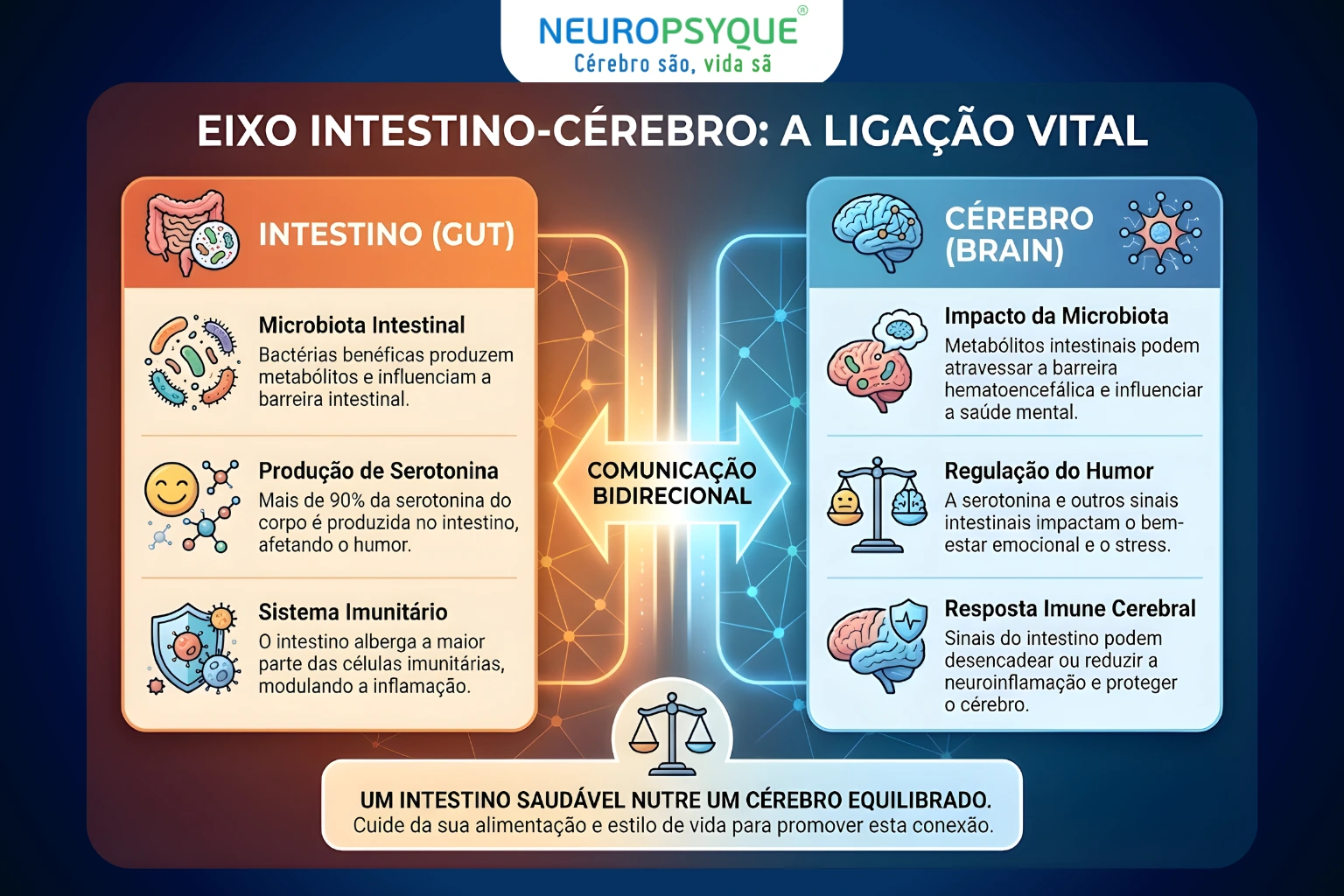
How the Gut and Brain Communicate with Each Other
A communication between these two organs takes place through various pathways, in a two-way dialogue, in the two directions, known as gut-brain axis.
The Vagus Nerve: The Motorway of Communication
O vagus nerve, This is the longest nerve in the body, which connects the brain to various vital organs such as the heart, lungs and intestines, works like an information motorway between the intestine and the brain. Interestingly, around 80-90% fibres of this nerve carry messages from the gut to the brain, and not the other way round. This means that the intestine is constantly sending “reports” to the brain on the state of the digestive system, influencing our mood, anxiety levels and even our ability to concentrate.
Neurotransmitters Produced in the Intestine
Intestinal bacteria are true chemical factories. In addition to serotonin, produce GABA (a calming neurotransmitter), dopamine (associated with motivation and pleasure) and short-chain fatty acids that nourish brain cells. When there is imbalance in the bacterial composition - called dysbiosis - this production is compromised.
When the Gut is Out of Balance, the Brain Suffers
A intestinal dysbiosis can trigger a cascade of negative effects. A compromised intestinal barrier - sometimes called “leaky gut” - allows bacterial toxins to enter the bloodstream, causing systemic inflammation (all over the body). This inflammation does not spare the brain: crosses the blood-brain barrier and contributes to symptoms such as mental fog, fatigue, mood swings and cognitive difficulties.
What Conditions Are Linked to Intestinal Health?
Scientific research has revealed surprising connections between the microbiome and various neuropsychiatric conditions. People with Irritable bowel syndrome have three times (3x) more likely to develop anxiety or depression. Studies also show significant changes in the microbiome of people with major depression, bipolar disorder and generalised anxiety.
Even more impressive: in the Parkinson's disease, intestinal changes and constipation often occur years before of motor symptoms. This discovery opens the door to prevention and early intervention strategies that can make all the difference to prognosis.

How to Take Care of Your Gut to Protect Your Brain
The Mediterranean diet has shown remarkable results: a reference study showed a 33% reduction in the risk of depression among those following this dietary pattern. Recommendations include: eat at least two meals a day that include meat or fish, increase fibre intake (25-35g a day), include fermented foods such as yoghurt and kefir, favour omega-3s found in oily fish and nuts, and avoid or limit ultra-processed oils, refined sugars and all kinds of ultra-processed foods.
Life Habits that Make a Difference
O regular physical exercise positively modifies the composition of the microbiome. O adequate sleep enables intestinal and brain regeneration. A stress management is crucial, because high cortisol alters the bacterial composition. Practices such as meditation and mindfulness have been shown to improve not only emotional balance, but also intestinal health.
Innovative Treatments: From Nutrition to Neurotherapies
In addition to nutritional interventions, promising approaches are emerging. The psychobiotics - probiotics with proven benefits for mental health - show encouraging results in the reducing anxiety e improved mood.
In cases where stress and anxiety may be causing the problem, An effective solution must combine different avenues of intervention. A Neurotherapysuch as Neurofeedback and Transcranial Magnetic Stimulation, This can complement intestinal modulation strategies, acting directly on brain circuits while working on digestive health. This holistic vision, which treats the person as a whole and not just isolated symptoms, represents the future of medicine.
Key Points to Retain
- The gut contains 500 million neurons and produces 95% of the body's serotonin
- The gut sends more information to the brain than it receives
- Imbalances in the microbiome are linked to anxiety, depression and other neurodegenerative diseases
- The Mediterranean diet reduces the risk of depression by 33%
- An integrated approach - combining nutrition, lifestyle and neurotherapy in cases where there are associated comorbidities - offers the best results
Frequently Asked Questions
How long does it take to improve intestinal health?
Changes in the composition of the microbiome can occur within a few days of dietary changes. However, for sustainable benefits to mental health and the body as a whole, it is recommended to maintain healthy habits always, It takes at least 8 to 12 weeks to evaluate.
Are probiotics enough to treat anxiety or depression?
Probiotics can be a useful complement, but they are no substitute for professional counselling. The best approach is an integrative one, combining nutritional interventions with other therapeutic strategies appropriate to each case.
Which fermented foods are most recommended?
Natural yoghurt with live cultures, kefir, unpasteurised sauerkraut, kimchi, miso and kombucha are all excellent options. The ideal is to vary between different sources in order to obtain a diversity of bacterial strains.
Can stress directly affect the gut?
Yes. Chronic stress alters the composition of the microbiome, increases intestinal permeability and can cause or aggravate digestive symptoms. Stress management is fundamental for intestinal and brain health.
How do I know if I have intestinal dysbiosis?
Symptoms such as persistent bloating, changes in intestinal transit, fatigue, mental fog or mood swings can suggest an imbalance. A professional assessment can identify the cause and define the best intervention strategy.
Can neurotherapies help with intestinal problems?
Indirectly, yes. Techniques such as Neurofeedback help regulate the autonomic nervous system, which controls digestive functions. By reducing hyperactivation of the sympathetic nervous system (associated with stress), they can improve intestinal function.