Skip to content



Imagine being so absorbed in a task that the hours pass like minutes. Your mobile phone rings, someone calls your name, but nothing breaks that bubble of concentration. When you finally "wake up", you realise you've forgotten your lunch and it's already evening. If this scenario sounds familiar, you've probably experienced hyperfocus.
The Attention Paradox: When Concentrating Too Much Becomes a Problem
Attention Deficit Hyperactivity Disorder (ADHD) is often associated with difficulty maintaining concentration. However, many people with this condition describe the exact opposite: moments when concentration becomes so intense that everything else disappears.
Hyperfocus reveals that ADHD is not simply a "lack" of attention, but a difficulty in regular attention. It's like having a mental spotlight that, instead of gently illuminating various areas, sometimes scatters chaotically and sometimes fixes on a single point with overwhelming intensity.
What exactly is Hyperfocus?
Hyperfocus is a state of deep and prolonged concentration on a single activity. During this state, the person experiences total immersion: time distorts, external stimuli become imperceptible, and there is a sense of natural "flow". The problem arises when the person is unable to interrupt it voluntarily - even when they need to.
Hyperfocus vs. Normal Concentration: What's the Difference?
In a period of normal concentration, we retain the ability to monitor the environment and interrupt the task when necessary. In hyperfocus, this alert system switches off. You may hear the alarm, but your brain doesn't process the information as relevant. This is not irresponsibility, but a neurobiological difference in attention management.
Why Does Hyperfocus Happen? The Role of Dopamine
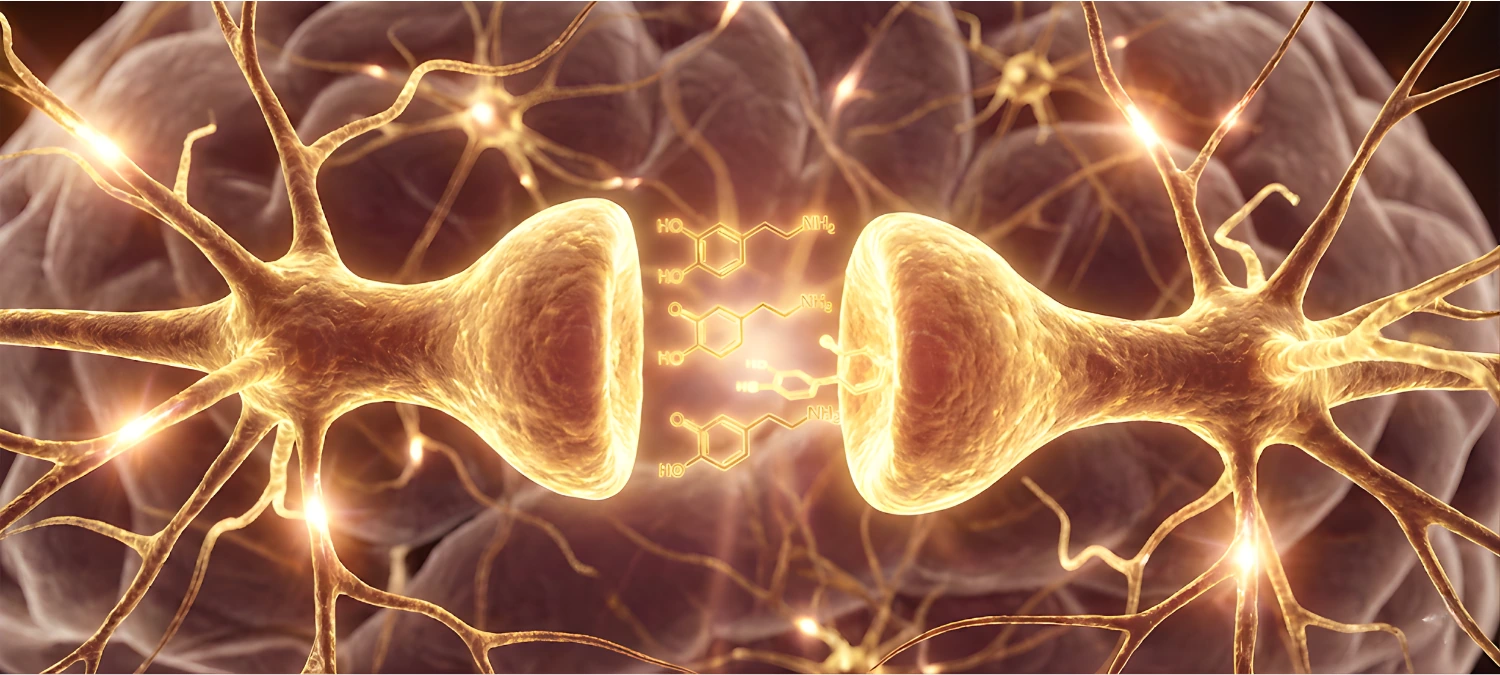
The key lies in dopamine - a neurotransmitter (brain chemical) responsible for motivation and attention regulation. In ADHD, there is a dysregulation in this system, making it difficult to maintain adequate levels of dopamine for "unstimulating" tasks.
When an activity is highly interesting, the brain's reward system activates strongly, more than is natural in someone who doesn't have hyperfocus. The brain receives the stimulation it needs and "clings" to that source of dopamine. The result? Intense concentration that the brain is reluctant to let go of. This also explains why hyperfocus rarely happens with boring tasks.
Who Experiences Hyperfocus?
Hyperfocus is more common in ADHD, but it's not exclusive to this condition. People on the autism spectrum often describe similar "special interests". Neuroscience classifies profiles with this type of behaviour as "neurodivergence". Being neurodivergent, rather than neurotypical, does not compromise a full and productive life. Anyone can experience similar states in circumstances of high motivation, interest or need; the difference lies in the frequency, intensity and difficulty in controlling these episodes.
The Two Sides of Hyperfocus: Advantage or Problem?
Hyperfocus is a "double-edged sword". On the one hand, it can be an extraordinary source of productivity - many creatives, entrepreneurs and artists with ADHD attribute part of their success to this ability. On the other hand, it can cause problems: neglecting meals, sleep and responsibilities; ignoring important people; missing deadlines etc. In the long term, it can contribute to burnout, increasingly common, and difficulties in personal and professional relationships.

How to Recognise Hyperfocus in Daily Life
Some signs include: frequently losing track of time in certain activities; ignoring basic needs such as hunger or thirst; difficulty responding to necessary interruptions; irritation when forced to stop; neglecting various responsibilities in favour of more stimulating activities. If these patterns have a negative impact, it's worth exploring the underlying issues of focus and attention regulation.
Strategies for Managing Hyperfocus
The aim is not to eliminate hyperfocus. Like autism and ADHD, which aren't exactly diseases, hyperfocus can hardly be eliminated. What is possible, and has many benefits, is to develop greater control. Some useful strategies include: multiple alarms; asking people close to you to intervene in person; setting time limits before to start activities prone to hyperfocus; to use techniques such as the Pomodoro method; to identify the "triggers" of hyperfocus in order to be able to anticipate and plan, avoiding failures in responsibilities and commitments.
When to seek professional help
When hyperfocus significantly affects quality of life and causes a "dent" in everyday life, it is advisable to seek specialised assessment. A proper diagnosis opens the door to effective interventions, from cognitive-behavioural psychotherapy to pharmacological treatment, or even Neurotherapy. Approaches such as NeurofeedbackThe new technology, which makes it possible to observe the functioning of the brain in real time and mould it to needs, has shown very promising results, helping the brain to develop more balanced self-regulation patterns.
Key Points To Retain
Hyperfocus is a state of intense concentration often associated with ADHD and Autism Spectrum Disorders.
It's not a "super-capability" or a defect - it's a characteristic that can be advantageous or problematic, depending on how it is included and adapted to everyday life.
The neurobiological basis involves the dopaminergic system and the brain's search for stimulation.
It is possible to develop strategies to manage hyperfocus without eliminating it.
It's never a good idea to look down on hyperfocus, especially in an attempt to eliminate it.
A professional assessment can help identify an appropriate intervention that eliminates the damage that hyperfocus is causing, while maintaining the benefits that are recognised.
Frequently Asked Questions
1. Is hyperfocus exclusive to ADHD?
No. Although common in ADHD, it also occurs on the autism spectrum and occasionally in neurotypical people. The difference lies in the frequency and difficulty in controlling these episodes.
2. Can hyperfocus be used in my favour?
Yes. When directed towards activities aligned with your goals, it can be a source of exceptional productivity, and bring a great deal of satisfaction and personal fulfilment. The key is to "channel" this capacity intentionally, in a controlled way.
3. Does ADHD medication eliminate hyperfocus?
Not necessarily, but it can happen. In developing brainsMedication, in particular, doesn't really help to eliminate hyperfocus. Even so, medication generally helps to regulate attention in a more balanced way, allowing for a greater ability to "break out" of hyperfocus when necessary, but without eliminating the ability to concentrate deeply.
4. Are there any non-pharmacological treatments?
Yes, cognitive-behavioural psychotherapy, specialised coaching and Neurotherapy such as Neurofeedback can help develop greater self-regulation.
5. What is Neurotherapy?
These are techniques that directly modulate brain activity. A Transcranial Magnetic Stimulation uses magnetic fields to activate specific regions. O Neurofeedback allows you to regulate your own brain activity in real time. Both are non-invasive, painless and based on neuroplasticity.